

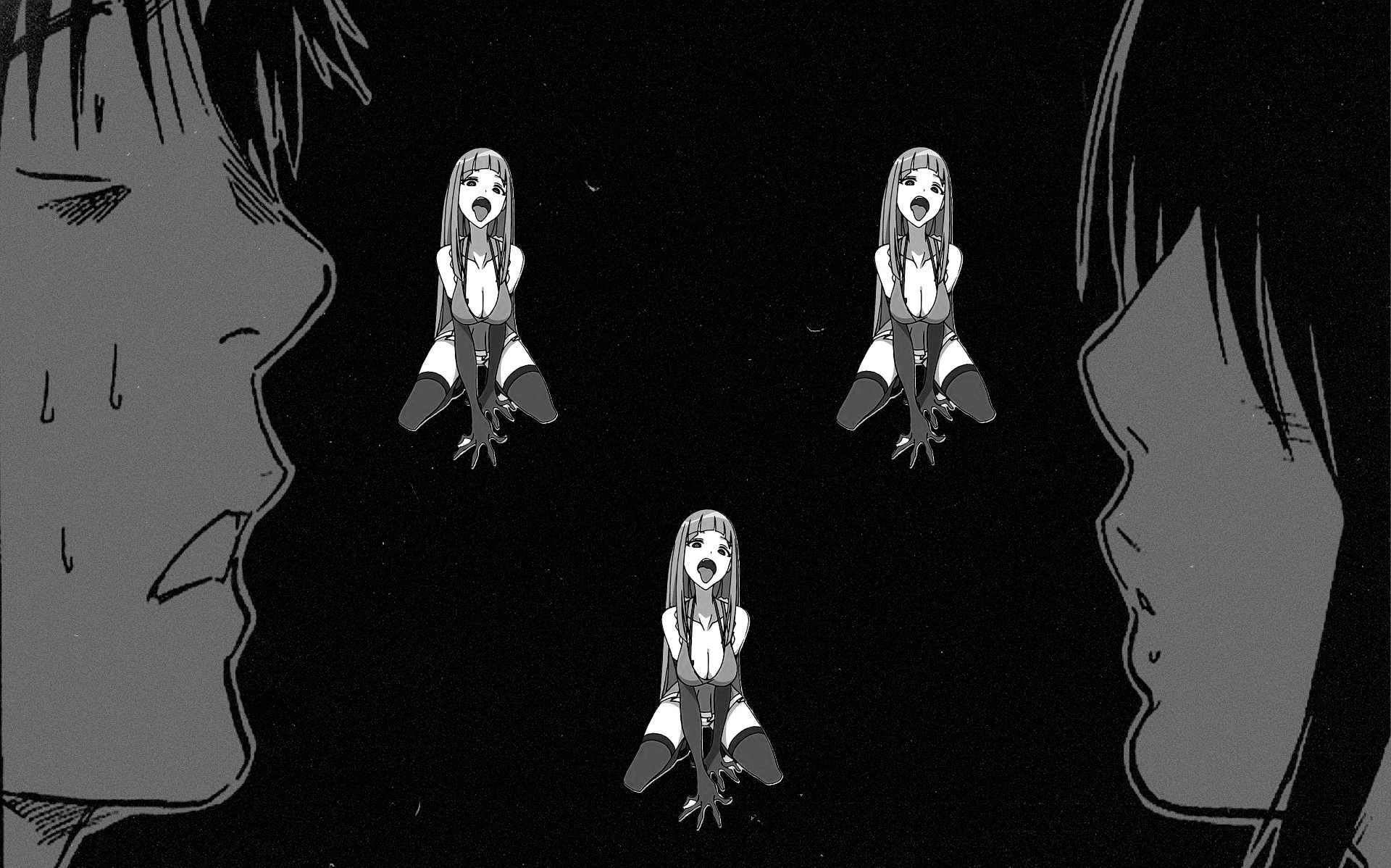
“Anime fans, in a narrow sense, do not change. I resigned myself to the fact that their understanding would probably not change in my lifetime. Of course, they are conforming to a single standard. As long as they are alive, they only like the same things. They’re not looking for change. They endlessly seek the same pleasures. Even if you say that other interesting things exist, they can’t be bothered. It’s something they didn’t ask for and don’t care for.”
- Hideaki Anno, co-founder of Gainax and founder of Studio Khara.
“Almost all Japanese animation is produced by humans who can’t stand looking at other humans. And that’s why the industry is full of otaku.”
- Hayao Miyazaki, co-founder of Studio Ghibli.
The Realization of Anime and Manga’s Dangers
We rarely provide personal anecdotes in our writing, but we choose to do so here, because the realization that led to the impetus behind this set of articles is something that extends from our personal experience. There was a point in our life where all we did was consume media, often to the detriment of our personal, educational and professional obligations. These factors are behind us now, but we may still provide the opportunity of communicating these aesthetic and lived experiences without having the reader subject themselves to the same outcomes, and without running the risk of making the same mistakes.
We must first start by relating one major experience in our progressive realizations, that being the watching of the film End of Evangelion for the first time. Various memes and discussions of Neon Genesis Evangelion drew us to watch it by ourselves in early 2014, and it cultivated certain expectations and sentiments towards the show’s themes and its characters, as well as the plot that operated these factors in tandem. Suffice to say, if the reader knows anything about End of Evangelion and its cultural impact, it was an eye-opening experience. Most people that participate in the more degenerate aspects of anime and manga fandom detested this movie in its initial release back in the mid-90’s, as many still don’t like it today, but I was floored by the plot and imagery on display, in all its aesthetic and eschatological glory and horror.
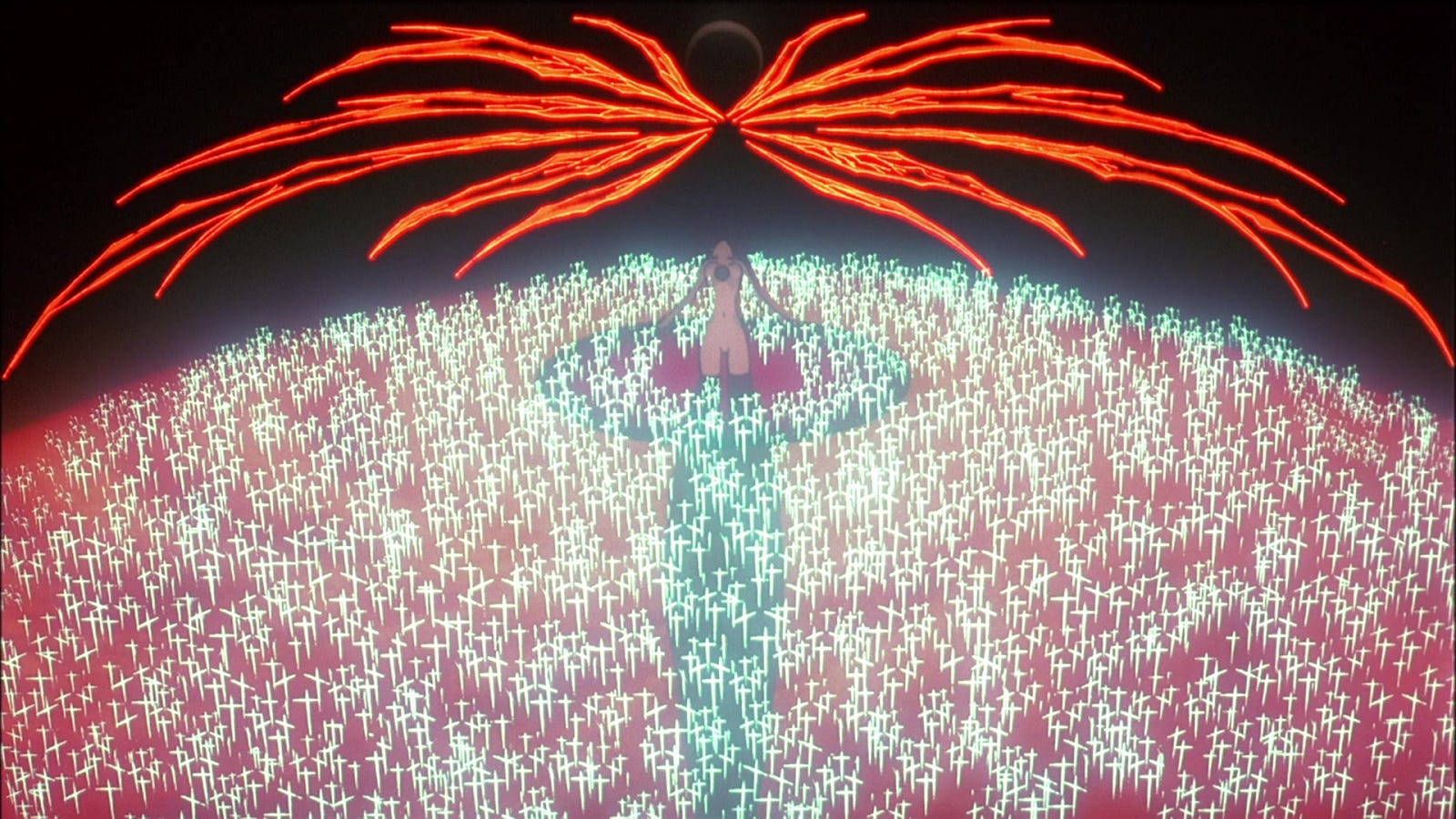
Even now Evangelion is still talked about and culturally impactful nearly 30 years later, with the waifu wars between Asuka and Rei (and even Misato) still raging on - people are very much hung up on such fandoms, for better or worse. Regardless, we must note the boldness to have such an uncompromising artistic vision to go against anime trends, especially with regards to “mecha” anime conventions, and subverting established tropes to make something much more reflective, mature, and intellectually engaging - something to contemplate over. It made me reflect on my own connection to the characters and that, on the cosmic scale of the human drama that plays out in End of Evangelion, its all rather insignificant, and that any sentimental attachment to any character ultimately closed off my awareness to what was really going on in the background of the narrative the entire time. I had broken free of the meta-narrative prison.
Hideaki Anno, the major show runner for all of NGE, has been notoriously critical of fandom and otaku in general, anime and manga or otherwise, so he often makes a penchant of going against convention and expectation to “go against the grain” so that people think more about deeper questions. If people always received a happy ending, or if the narrative was easily wrapped up, then people wouldn’t think about more important questions or mysteries of life, and, therefore, they wouldn’t seek out any answers. Anno and the works of David Lynch, especially with regard to Twin Peaks, have many similarities in this regard.
Conversely, Hayao Miyazaki, is equally if not more so critical of such otaku, not wanting to contribute to certain anime trends, and even going so far as to foster the creation of the so-called “Ghibli style” which elevates the elements of anime and manga artistic conventions to a higher level, as well as trying to craft stories with uplifting and important themes. The stories are beautiful, but they also don’t purely just show the viewer what they want to see, much in the spirit of Anno, or vice versa.
To show viewers only what they want to see would liken the creator to be more so of an entrepreneur that only cared about profit, or, even worse, relative to a pornographer of sorts, showing lascivious material to the detriment of the viewer and society at large. As such, this warrants a further in-depth consideration through a piece of media that shares in such themes.
The Psychic Prison of Me!Me!Me!
The short and music video by the title Me!Me!Me! released to much fanfare and attention towards the end of 2014 for the Japan Animator Expo, a combination project mainly spearheaded by TeddyLoid, the composer of the track, and Studio Khara of NGE fame. When I first saw it around the time of its release, it was tantalizing yet confusing as to what the desired end of the artistic venture was. We will warn the reader that this piece of media is explicit, so view it at one’s own discretion. Regardless, it gained much attention, meme status, and the dance iconography became easily adapted to many other female anime characters, and it seemed that the intention of the work was lost somewhere in the shuffle.
Me!Me!Me! is an elaborate music video that tells a story of a nameless male character lying in his room, the beginning frame frozen on a still image of his face resting horizontal on a pillow, surrounded by figurines of anime memorabilia, cigarettes scattering the room in a light characterization of vice and general slothfulness. A flickering screen draws us in to a female anime character with a cheerful and exuberant affect, bouncing all around in scantily clad fashion, striking kawaii poses while also displaying her overt sexualization; it’s as if the character screams, “Look at me!” or “Love me!”, demanding attention and facilitating distraction away from the real world; she even holds her hand out as if to profess love to the viewer, going so far as to make a heart symbol with her hands over her cleavage. The male character, in simplified artistic fashion, looks blissfully lulled into a state of complacency, a cigarette smoking as it loosely hangs from his mouth.
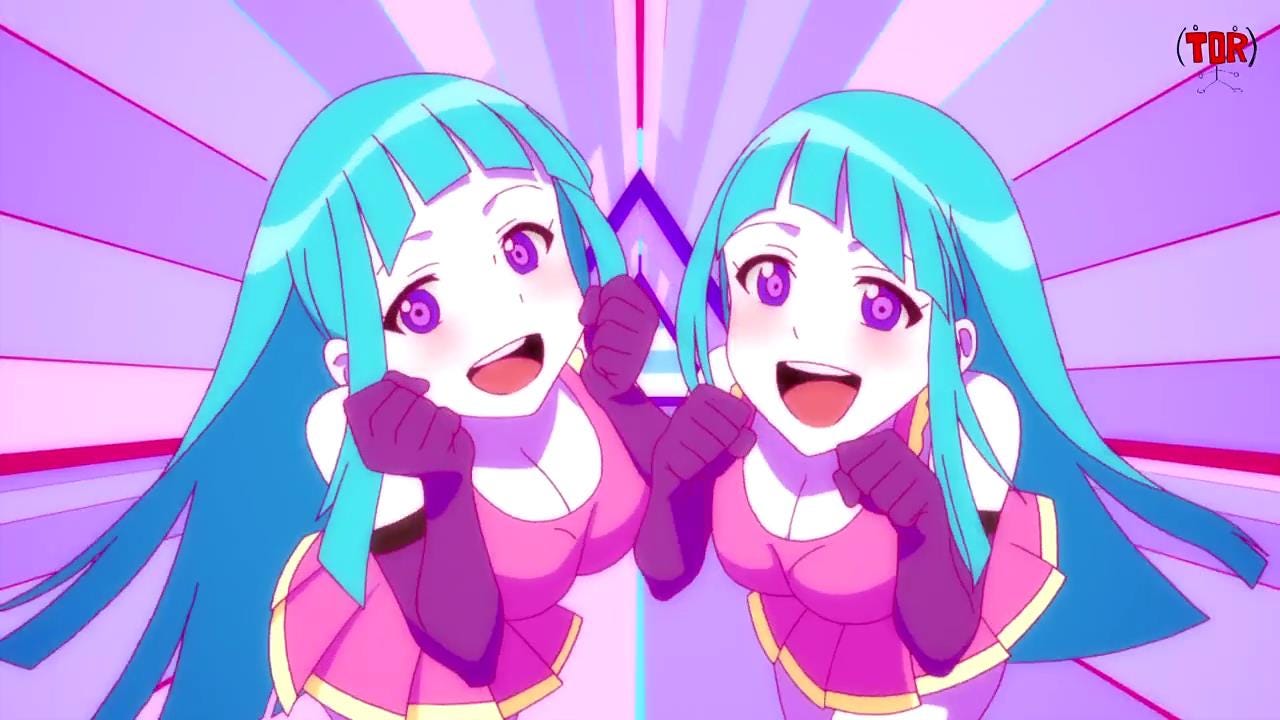
The female anime character dances in tandem with more that look just like her, with bright colors and cheery sounds, whilst showing her panties (another major trope in anime and manga), her thinly veiled breasts and buttocks on full display. There are a plentitude of the anime girls just as there are the multiple senses that pull one towards vice, as well as there are a plentitude of different objects of vice themselves that operate towards the same end, facilitated also by the memory, fantasy and imagination which are passive in nature. Plurality and multiplicity, passivity and receptivity - these things are the metaphysical nature of femininity, whereas the singular and active is the properly oriented masculine. The female anime character is made to be an object of both devotion and sexual arousal, transitioning from a light dress to a lingerie bikini, while the male character, half interpolated to be the viewer themselves as a result of the video perspective, watches uncritically, his intellect dulled and senses overwhelmed, his potency removed. The upbeat music and Japanese lyrics reflect this:
“Tell me now, tell me now
How you felt when we were always together!
Tell me now, tell me now
Why my mind is always stuck on thinking of you?
Your company, all your times with me”
However, things will take a quick turn in a darker direction, prefaced by these lyrics:
”My feelings for you integrate
But besides all that, but besides all that
Come and share with me; I’ll display your throbbing dolor (pain)…”
The scene quickly transitions towards darkness, revealing a nude feminine figure, singular and prominent as she sits in a chair, as if on a throne or pedestal, her face covered by a mask with many red eyes, her pink hair in a tight ponytail. The previous anime girls become essentially nude as well, covered only by thin circuit-like lines, with piercings on their nipples and genitalia with a small thread fed through each to connect them to collars around their necks like slaves, very much reflective of veritable “ties that bind”. Vice, understood in this context, enslaves the will and delimits the freedom of the will entirely, as one cannot truly make free decisions if they are slaves to vice. Moving on, the anime girls’ dance becomes less elegant and more crude in its sexuality, downward feminine triangle symbols swirling about, the linework designs like red lasers, making the scene connote a sense of danger and imprisonment, in vice or otherwise. The female on the throne walks to the male character confidently, knocking him out of his stupefaction with horror, all to be smothered by the throne female’s breasts until the male can no longer be seen within them, punctuated by blood oozing up from inside the fleshy mass. The lyrics of note that accompany the more tenebrous music are as follows:
”You told me, I’m all yours;
I will become your special little one
(I feel) all the pain, all of the hate;
its building up, could I (just) be a (dream)?
Are you sure that you have not
Created and molded an idol out of me?
What you see, is it me?
Seems coincidence, baby,
I live your mind’s own fantasies…”
We soon find the male character wake up in his room, as if it was a dream, but the throne female launches out the screen, crawling along the walls in the room with our main character, much to his horror. He sprawls away onto the floor on his back, all for the throne female to creep up to him between his legs, revealing a pink-haired girl behind the mask, all while the NGE female figurines come to life and crawl onto him, followed by the throne female vomiting a thick, white liquid down the male’s throat (insert your own suggestions here).
What we find here is a character possessed by an unreal idealization of feminine sexuality, to the point that he doesn’t even realize how much he is beholden to it, but, when the fullness of such manipulation is revealed, he reels in disgust away from it. If only people knew what forces they were subject to in this post-modern age in which they live, because, if they actually saw the forces they were communing with face-to-face, the knowledge of what they were interacting with would cause the same reaction as the male character in Me!Me!Me!
The video goes on to have the male’s reality fractured, his sense of scope and scale all discombobulated - tunnels, labia-like eyes, female mouths open wide like Kali, ready to consume with an insatiable appetite for the material - to the point where it seems the throne female is his entire world, existing only on the tip of her nipple, but our character finds himself in a dilemma. The throne female looks like another female character, this one seeming to extend from the real world. We’re meant to intuit that this new female is an ex-girlfriend of the male character, and that she was upset at their breakup, the male sheepish and annoyed as he casts the girl aside, all while the girl cries on the ground begging, seemingly as if the male is in favor of the virtual experience of the unreal anime girl that possesses the forefront of his mind. The character has a choice: the girl in the real world or the one of fiction? Obviously, he chose poorly, which is the entire emotional impetus behind this piece. The lyrics reflect this as well:
”Nothing left but disappointment of the life
that you lived, that you had, its true
All it took was just a blow to divide all of our days apart,
and I’m crying, “Love me, feel me, please come back to me!”
I’m here, I’m wishing to reset it all.”
His ex-girlfriend calls out to him, but he doesn’t answer, though, since this is his mind, he clearly still heard her but just didn’t want to listen. Oftentimes we, in our worlds, deny the petitions of those we ought to hear in favor of our own selfish desires, many of which weren’t even real in the first place, or, even worse, reflective of vices that draw us closer to our own perdition.
It’s clear the male character regrets this state of affairs, however, with thoughts of the joys of his past relationship coming to his memory, all while the throne female thrashes a representation of his corpse, consumed from the bottom up and bloodied, feasting on his entrails before running away like an animal. The ex-girlfriend tries to kiss the male back to life to no avail, and the scene fades to darkness.
The male cries out in deep emotional pain, reintegrated into the form of a mech-like battle suit with rockets and guns, reflective of certain aspects of the male power fantasy that extends from shonen, ready to do battle to retrieve his lost love in his heroic mode. He goes on, like in an FPS style video game, gunning down the demonic anime girls, each exploding into green goo and crying out in ecstasy as they’re shot. However, he’s not fully in control, as the throne female seems to control this world of the mind, hurting the male and even taking off a limb, all while his ex-girlfriend is pulled away from him in a tumultuous scene, very much like the winds of lust from Dante’s Inferno. The lyrics cry out:
“Miles and miles away, you are still
the number one thing on my mind
Ever since then, from that moment
when I had a dream;
The flower that I saw, brought you to me.
So please, please remember everything
that we once upon a time had in our fairy tale dream
Thought it hurts a little more than you thought
I’ll be waiting for you.”
The male finds himself floating through space in front of the throne female’s “mother-ship” which is part light-show, concert stage, and weapon of war. The open chasm of the front is like a mouth, the anime girls in their demonic mode lined up like soldiers inside, the walls made of flesh and textured like the birth canal, a large circular light in the back like a cervix, all for the throne female to stare from the back with a sense of command and ire against the protagonist. Though he is there to confront them, the male seems like he feels powerless. The anime girls shoot bullets from their breasts like turrets, and, no matter how many missiles the male shoots from his back to mitigate the barrage, he succumbs to them, being ripped apart until there’s nothing left but his head, the throne female and anime girls caressing what remains of his flesh. All of this culminates into his head coming to fall down gently upon a white ground. He opens his eyes, and the video loops right back to the beginning where we started, for all the events to play out again ad nauseum until the video is closed. The lyrics throughout echo such realities:
"This is your chance now to change your whole life.
But will you?
Cause now’s the time to make decisions count.
But will you?””Anything you do to try to change your life is a waste,
you’re a loser and you won’t go far.”“Trying your best isn’t always enough;
what’s the plan for you, can I call your bluff?
I await the day that you will realize that it’s all in your head;
you’ve nowhere to hide.”
So, not only is this experience a deep spiritual hell, but, like hell itself, it appears to be eternal, stuck in a constant loop of suffering and torment, and, what’s worse, is that both are self-imposed. It is more than likely that many men in the world are stuck in such vicious cycles of possession and unreality, and women are certainly no different, though maybe to a lesser degree of quantity, with the phenomenon of fujoshi (腐女子), i.e. “rotten girl”, being well recognized. Suffice to say, both male and female otaku are stuck in their own obsessions. It’s clear that TeddyLoid and Studio Khara have a strong sense of this societal issue, as evident by the art speaking for itself.
The Otaku to Hikikomori Pipeline
Multitudes of people are found to be in rather isolating experiences as a result of their hyper-fixations, and otaku are no exception, in the anime and manga field and beyond. This is a phenomena that we have recognized in many other domains as well.
With regards to media specifically, people used to have more shared cultural experiences in the past, due to the fact that culturally understood information was experienced through limited channels. First there was only oral tradition and folk tales, then print media had people reading the same books and periodicals, and the same thing was true as media moved from radio to television as well. However, with the internet age being as it is, its much easier for people to gain access to a wide deluge of information, but the opposite side of that coin is that people will be able to find their way into hyper-specialized subsets and subcultures of information that alienate them away from others. Nerds and fanatics, otaku, thrive with regards to their interests in this sort of environment, more often to the detriment of their social connections with others. They have little common experiences with the multitude as a result of their special interests, and have fewer shared interests with the people around them, which then predispose people into small online communities with little connections to the outside world, which we say with a certain degree of self-awareness in this regard.
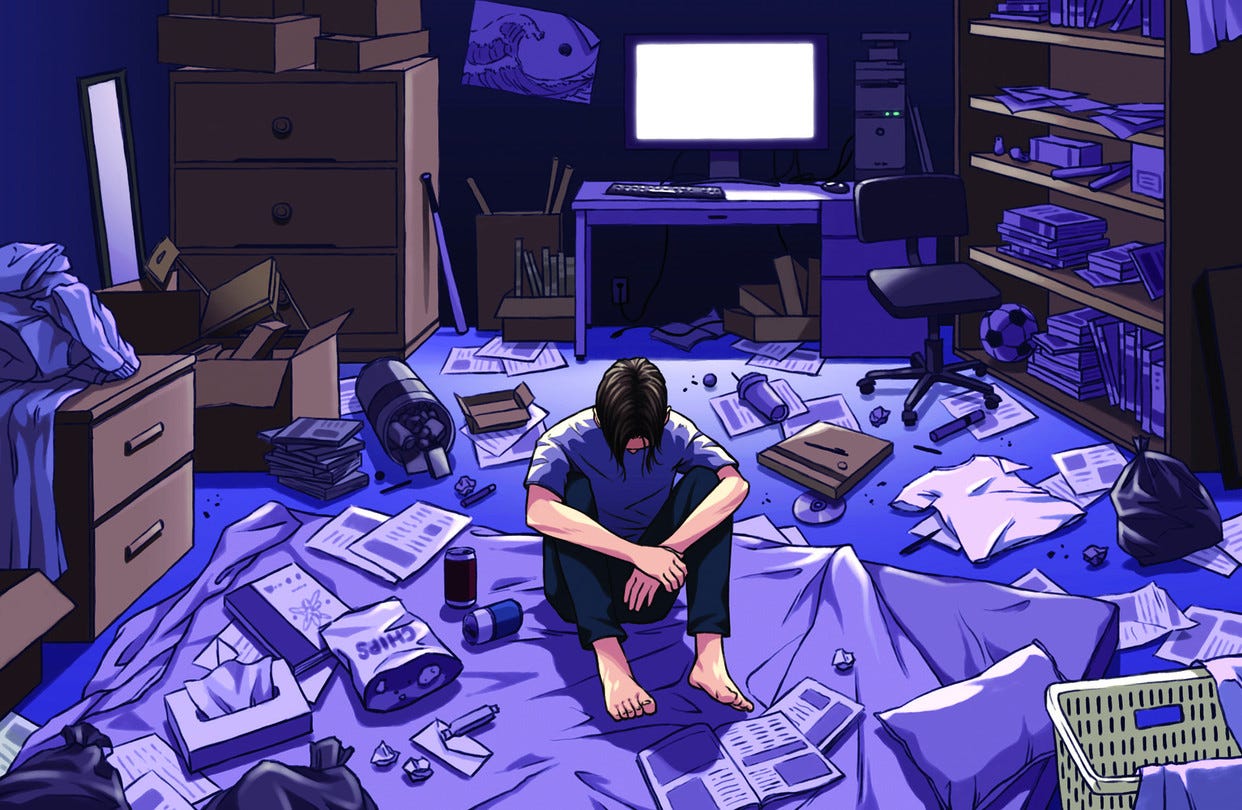
This phenomena predispose many in Japanese society to become what’s referred to as hikikomori (引きこも), i.e. “pulling inward” or “shut-in”, in which people retreat from society, mostly stay at home, and even refuse to leave the house, which has become an alarmingly familiar trope in certain anime and manga works. The reason this has become more popular of a concept is due to the fact that, over the past 35 years in Japan, increasing numbers of people have transitioned into becoming hikikomori, often living off of their parents or relatives for financial support. There are a multitude of cultural reasons as to why this phenomena has become more widespread, mainly due to crushing societal expectations, unhealthy work-life balance, as well as anxiety and autism-spectrum disorders, with the former two being more so from a Japanese societal context, whereas the latter are ubiquitous across all cultures. This behavior is seen especially in youth, but many have aged into their 50s while still maintaining this condition.
This phenomenon has been studied extensively, and we don’t intend to offer a full purview of the factors at play here, but some factors of note must be mentioned. The hikikomori severely dislike social interactions, presumably due to either negative prior experiences which could give rise to anxiety, this causes the withdraw into becoming a hermit-like individual, but there’s one important distinction: true hermits recede from greater society because being alone with God is better, as it extends from a properly oriented spiritual practice, whereas these hikikomori are marked by extreme emotional distress and not being able to function as fully realized people, hence the stigma associated with the condition. We have nothing but compassion for such individuals and do not wish to stigmatize them further, and we more so wish to provide information and opportunities by which to understand such a condition, using the issues as stated above.
Not all otaku become hikikomori, as this would be ludicrous to consider as a possibility, but the majority of hikikomori are otaku, due to all the the factors listed above by which anime and manga, with their fostering of hyper-fixation, has the tendency towards otaku obsession, then to progressive social isolation, and then, of course, to potential societal withdrawal and the emergence of the hikikomori lifestyle.
It should be noted in passing that this phenomenon is not exclusive to Japan, as this can also be seen in Western countries as well, and, we would argue, in all most-developed countries that have the material and cultural decadence that could result in such individuals’ existence. In the US alone, there are supposedly 7 million men, not including the women which more than likely exist but at a much smaller proportion, that have just “checked out” of society and refuse to work, partially because they see no benefit in doing so and don’t feel invested in the greater society at large, but also because they find no pleasure in it, which reflects certain hedonistic principles in which vice further dulls the intellect away from struggle that would rather seek to improve it. The hikikomori lifestyle seems to then present itself in unique manifestations in different cultural and national groups, but the core of the phenomenon is still the same: people are trapped in a state of arrested development as a result of deep psychic dysfunction. To reflect this in praxis, we must go on further to assess another work of interest for our purposes.
The Insights of Welcome to the N.H.K.
The series entitled Welcome to the N.H.K, based off of the book by Tatsuhiko Takimoto from 2002, and later became a manga in 2004 and then anime in 2006, with the work containing many auto-biographical elements, since the author has stated that he was a struggling hikikomori as well.
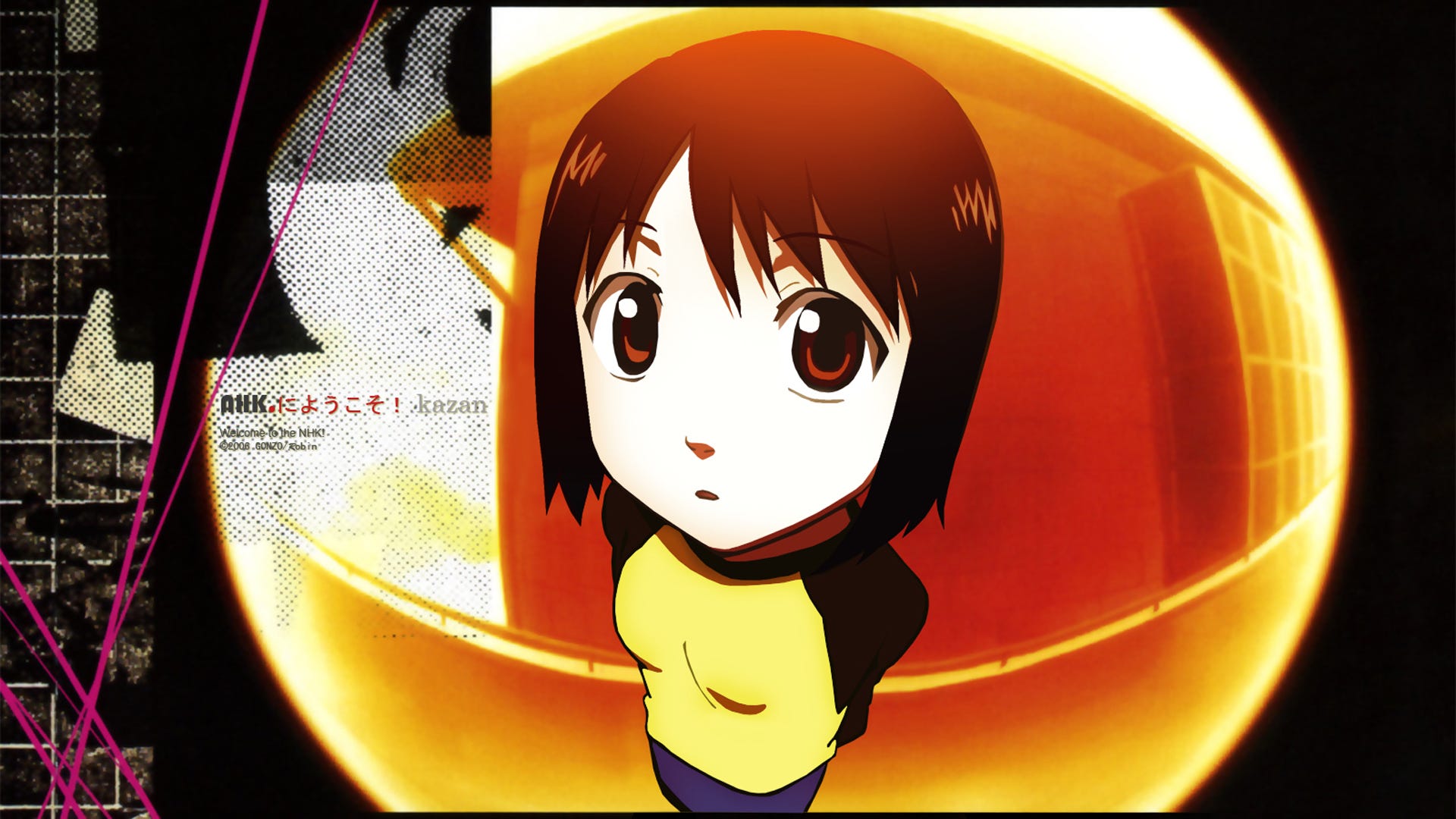
The series follows a 22 year old young man named Tatsuhiro Sato who is a hikikomori, believing himself to be as such due to a conspiracy (which we will note is a delusion resulting from his isolation) perpetrated by a group referred to as the N.H.K., which stands for Nihon Hikikomori Kyokai (日本引きこもり協会), i.e. “Japanese Shut-In Society/Association”. Kyokai can also mean church, guidance, and even admonishment, which is interesting for a couple of narrative reasons. The N.H.K., in this delusion, operates in the shadows to manipulate the media and cause the hikikomori phenomenon to occur and to further imprison the sufferers in this perpetual state. The reader may find there to be more truth here than meets the eye, despite the lack of true conspiratorial and organizational control in the real world.
Thankfully, the young female lead of Misaki Nakahara, a concerned neighbor who found Sato while spreading fliers for her aunt’s Christian church (Christianity has been deeply unpopular in Japan over several centuries, especially during the Tokugawa Shogunate), who wants to help Sato out of his hikikomori ways, though she too has many issues that are explored and developed through the series as well. Meanwhile, Sato tries to be more outgoing with the help of his younger friend that he knew from high school, Kaoru Yamazaki, who facilitates Sato into all manner of ill-conceived ventures and hijinks that push the story forward.
We remember watching this series as an anime in our early college years, and we, at the time, deeply empathized and identified with Sato’s plight, as the intense academic rigor in an unfamiliar city definitely gave us hikikomori-like tendencies, though, thankfully, we never delved too deeply into such a lifestyle. Still, we recognized that Welcome to the N.H.K. was a meta-cultural assessment containing a deep and biting critique of societal issues that alienated many young men and women into succumbing to such forces.
Sato, if he wasn’t an otaku at the start of the series, definitely becomes an otaku of various different interests as the story progresses. Both Sato and Kaoru seek to make an eroge, and erotic hentai game, together, which leads Sato to become addicted to playing eroge, as well as downloading explicit images online, to the point where he deletes system files to gain more storage space. Sato is evasive towards Misaki initially, not wanting to reveal that he’s a hikikomori, but they soon enter a contract in which she helps him with regular counseling sessions, even going to far as to pose as his girlfriend to prevent Sato’s mother from accosting him further or thinking less of him.
However, Sato eventually reconnects with a former female older classmate named Hitomi Kashiwa, who he idolizes and has a romantic interest for, and, as the series implies, very well may have been the person Sato lost his virginity to. Sato’s lack of true emotional grounding causes him to continue seeking Hitomi, despite her drug dependency and depression, even to the point of accidentally joining a suicide pact that Hitomi inadvertently drags him into as a result of her online group that formed for that explicit purpose. Suicide also continues to be a recurring theme in the show, due to the deep depressions and societal alienations that the characters experience.
Thankfully, the suicide plot is foiled and all members go home, only for Sato to fall into an MMORPG addiction (which is a topic we look forward to exploring later), under the guise of trying to earn money through the game via real-life trading. Sato remains in this virtual world for a long while, until Kaoru catfishes Sato by pretending to be a girl player character that Sato likes, all to break the hold that the game has on him. His illusion shattered, Sato goes on to find other business ventures, only to get pulled into a pyramid scheme by another former classmate, Megumi Kobayashi, who is trying to support her hikikomori brother, whom Sato played with in the MMO, through various other schemes and quick ways to make money. This furthers the theme of being taken advantage of others that one once shared an emotional tie with in earlier life, the isolation not fostering new personal connections by which to bridge out, but also the shared experience and trauma of hikikomori struggles.
Unfortunately for Sato, Kaoru has to leave to go back home to his family farm due to his father’s illness, causing them to finish the eroge in a rush, though their sales at the Comiket festival are lackluster. Defeated, Kaoru leaves and Sato is left with no prospects and alone with Misaki once more, who wishes to deepen her relationship with Sato by furthering their contract, deciding to put Sato's social progress to the test and go out on a quasi-date with him on New Years Eve, only for Sato to lose sight of Misaki and find his previous love interest, Hitomi, instead.
Misaki seeks Sato and Hitomi together and spirals into a deep depression. Sato investigates Misaki’s whereabouts later, only to find out about from her uncle about her mother’s suicide and abusive step-father. Sato then goes in search of Misaki to find her trying to jump off the same cliff where her mother committed suicide. Sato saves her only to try to kill himself in the same fashion shortly after, his delusion of the N.H.K. making him think that his self-sacrifice will save Misaki, though, serendipitously, an anti-suicide fence was installed into the cliff and his attempt fails, bringing Sato crashing back to the reality of the situation he’s found himself in. The two later reconcile and sign a new contract, agreeing to stay alive so that they can suffer together, hoping to move forward to a brighter future.
We can firmly say Welcome to the N.H.K. has quite the encapsulation of all the issues that contemporary Japan, as well as the world in general, faces, with regards to interpersonal issues that extend from society’s ills, and the show is not ashamed to relate all the major influences from the anime and manga world that facilitate such a worldview. The more we become isolated from others, the more our relationships become strained and we make decisions that are not in ours or anyone else’s best interests, either via distractions or obsessions or whatever, and the reader will note that works like these do not even approach the fullness of any realization that involves a true spiritual perspective. Most of the world seems very much “lost in the winds” these days, and we ourselves were no different until we started along the path we have chosen, or, perhaps, the path chose us instead.
Bringing Anime and Manga Full Circle - Full Conclusion
Anime and Manga have negative reputations with many for a reason. Despite the good stories that can be told via such mediums, the dangerous content that exists within them draw the ire of those that view the artwork from the outside. Anime and Manga can be weird, hypersexual, fantastical in its representations, and reflect cultural trends that are deeply concerning to society at large, and the reasons as to why the situation is this way have been succinctly explored.
Creators have a deep responsibility to those that view their art, and the same is true for those that produce anime and manga. If profit were the only important thing in society, people would only strive towards that which was in their own best interest financially, and the sad fact of the matter is that much of globalist society is predicated on principles based on valuing quantity solely without respect to quality - people will suffer as a result of these choices, just like in antiquity. In Scripture, whenever someone sought to count the people it always resulted in catastrophe and Divine Judgement. The more we value quantitative issues, the more we warrant and bring about our own ruin.
Creators have culpability for what psychic information they put out into the world, since words, and even images, possess a magical quality that effect the outside world, but the effect of the magic is dependent upon the intent of the magic. So long as people create works and images that display dangerous themes and images, without respect for their audience’s well being, there will be otaku and hikikomori, and there will be issues in anime and manga culture.
The key recognition is that the issues that the viewers of anime and manga possess are also possessed by the creators themselves, and they produce this sort of feed-back loop that forms a closed circle of influence, an ouroboros of generation and consumption. This closed system of feedback lends to Anime and Manga’s degenerative nature. One could even call the scene itself incestuous since it reproduces off of itself and within itself, which may explain partially the subconscious emergence of incest as a recurring theme in both anime and manga in general.
Both creators and consumers of such media have it in their best interest to broaden their horizons and to seek higher truth that the world has to offer. We ourselves sought upon the quest for truths and found Truth in the exchange, but if people can’t see themselves out of the prisons that they create for themselves - then they may never escape. However, people don’t recognize they’re in a prison if they can’t see the cage.
Always remember, find connection to others, find connection to community, and find connection to God, and, if one finds it difficult to find connection with those around you, seek God first and everything else shall follow.
“But seek ye first the kingdom of God, and his righteousness; and all these things shall be added unto you.” [Matthew 6:33]