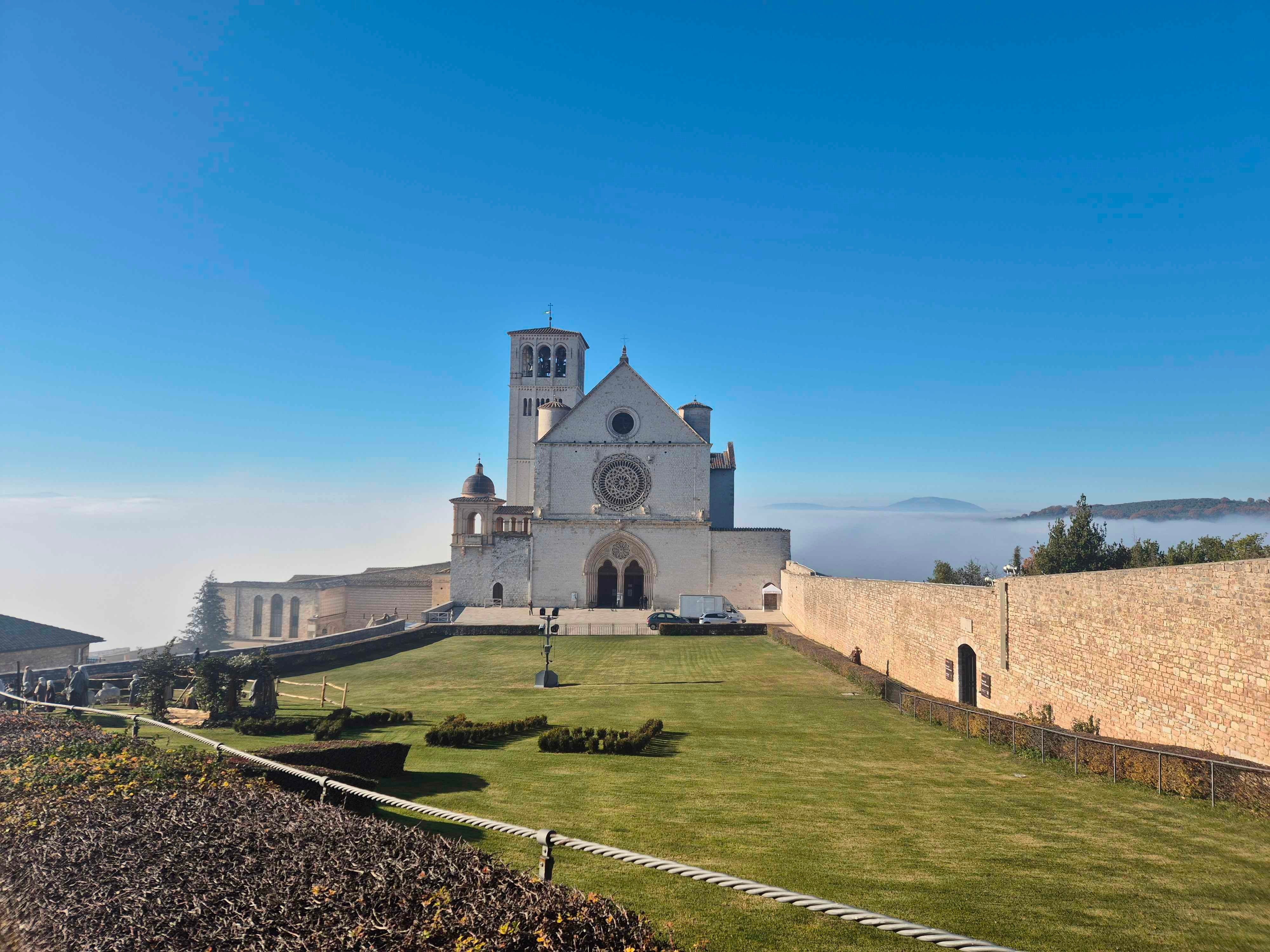
The dualistic heresy of the Cathars
The medieval suppression of heresies is often perceived as an oppressive struggle between dogma and free thinking, and while there was much violence and suffering, the true ideological background is often ignored. Unlike the relativistic approach to truth that prevails in popular consciousness, the moral order of medieval Christendom was grounded in the unity of faith and works, of contemplation and action. A person’s fundamental beliefs were not a trivial matter, but were understood to inform their ethic, their conduct, their character. Thus, when the Church suppressed the Cathars, a heretical sect of the twelfth to thirteenth centuries, it had in mind a threat to the very foundations on which society oriented its understanding of life itself and the standards by which they lived.
The Cathars were no small group of fanatics; their influence spread to towns and major cities across Southern France and Northern Italy. At first glance, their practice may seem to resemble the monastic tradition in their devotion and asceticism. They lived in peace, with little concern for the things of this world. They renounced property, money, fasted with austere discipline, and abstained from any sexual activity. But the grounds and broader vision on which this ascetic practice was based entailed a radically different interpretation of the fall and of creation.
Echoing the earlier Gnosticism of antiquity, the Cathars rejected the material world, positing a duality of principle forces at play identified as two creator deities: a benevolent God that created invisible and spiritual elements, and another malevolent God identified in Satan who presided over the material world and created all tangible things in it. Inherent to the Cathar myth of the fall was a doctrine of ontological dualism between two irreconcilable principles of good and evil, with mankind as a fundamentally spiritual being trapped in a corporeal existence to which he does not belong. To the Cathars, man had not just fallen, but entered a world totally irredeemable, a world inherently evil, and one to which his soul bore no ontological relation as its microcosm.
In such a world as the Cathars envisioned, the only solution was escape. Mankind’s liberation lay in renouncing creation entirely. The asceticism of the Cathars reflected this. They rejected meat and animal products because they came from sexual reproduction, and eating them was to participate in the impurity of the material world. The only exception was fish, which they believed to reproduce asexually. The Cathars also believed that animals contained imprisoned souls that were punished in a cycle of reincarnation; thus avoiding eating them out of compassion. There was no concept of hell in Cathar cosmology. The material world was already a land of suffering, and even the animals were on a path of liberation.
The Cathar belief that corporeal existence was intrinsically evil likewise pervaded the sexual sphere, as sexual intercourse and reproduction were strictly forbidden, as it was not only engaging in the impurity of bodily lust, but brought about greater suffering by bringing more souls into this corrupt world. Cathar anthropology also informed perspectives on the two sexes, the spirit being sexless and capable of reincarnating into either male or female bodies. In their societies, women could assume roles traditionally held by men, and vice versa. This included administering sacraments as ‘Perfecti’, the spiritual adepts and authorities of the Cathars.
It is clear from all these examples that every level of Cathar life was imbued with their cosmic dualism and their aim of rejecting this world. But how did they intend to escape it? Unlike the Catholic Church, the Cathars only held one sacrament, rejecting the others as materialistic. This was the consolamentum, a spiritual initiation like baptism, where the Perfecti put the Book of John over the head of the faithful. They were not baptised of water, but in the Spirit, and it was after this that the faithful were reborn. But there were still further ascetic practices to guarantee salvation.
One of these practices was the endura, a ritual fast. It was a necessary act of penance, often given to dying patients, so that they may leave this world and return to their heavenly abode. This involved, in some cases, starving the believer or, in other cases, providing only bread and cold water to them. Regardless, the end toward which this practice was oriented was the same: ritual suicide through a process of starvation. In some cases, death may be hastened by suffocation or poison administered by a Perfecti. But the implication is clear: the fundamental aim of Catharism was death, not as surrender, but as a defiant affirmation of good over evil, achieved through the total annihilation of all that is earthly and created, culminating with the final renunciation of one’s own life.
It was understandable that such a belief would pose a major threat to the Catholic Church - the Cathars necessarily rejected the Church and the whole order of medieval Christendom and its imperial grandeur; understandably so from their point of view - the medieval world was tough, technology was lacking, society was extremely hierarchical, yet the Church, which claimed to preach the virtue of an austere life, had buildings adorned with all sorts of treasures. It is hard not to see this as blatantly hypocritical. Christ called for his disciples to live a life of simplicity, to not love the world, nor the things of it (1 John 2:15). Christians understood that the glory of the beatific vision was not to be found in what we possess in this life, but after death in “the life of the world to come”.
The emergence of Catharism was no mere accident. It was an inevitable boiling point, an act of defiance against the monolithic unity of Catholic Europe by all those disillusioned by it. It is tempting to see pain, hardship, loss, and evil as objective realities in themselves, not as mere “privations of natural goods”, as Plotinus or Aristotle would say. The impressions of suffering are lasting, and the experience of evil seems almost like a power of its own. How many people today are disgruntled with our system at its very fundamentals? How many people feel disdainful of those with power? Catharism thus gathered into itself sentiments found universally throughout history, and yet in its heterodoxy, veered into nihilism, rejecting any possibility of redeeming the world and resolving its errors, condemning not only the materiality of the world, but the very concept of power itself and traditional social hierarchies, opting for total passivity.
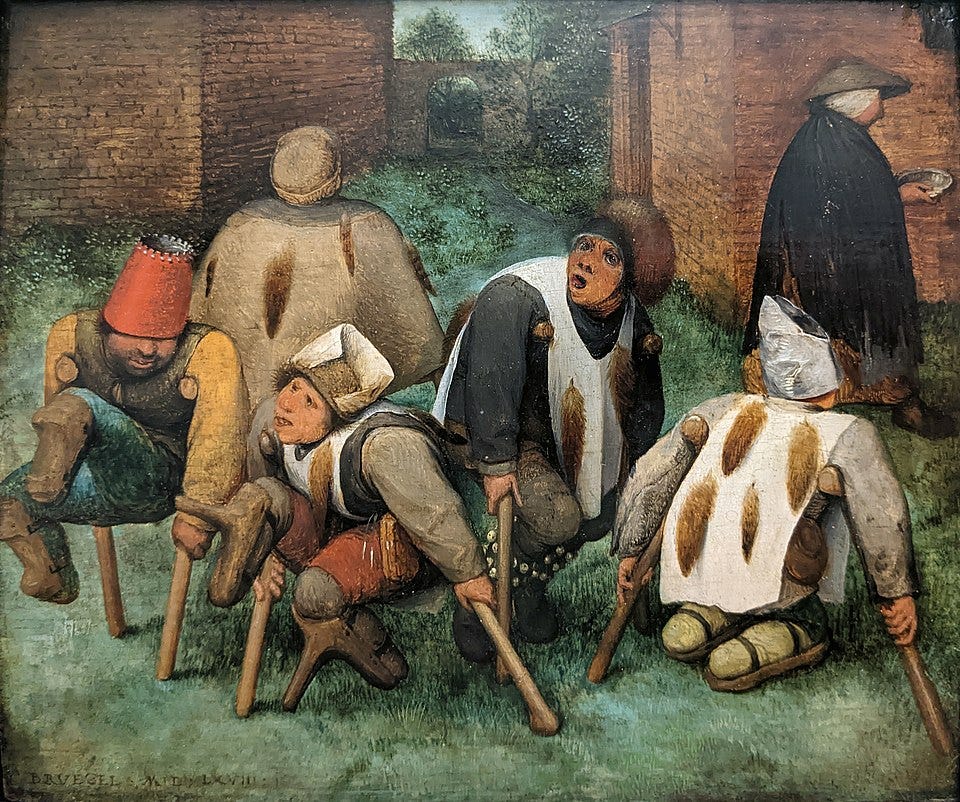
However, despite the allure of Catharism to those seeking detachment from the world and its vanities, others still led simple, ascetic lives without rejecting the society in which they lived. Saint Bernard of Clairvaux emphasised simplicity and poverty in contrast to the material extravagance of Cluniac monasticism, while simultaneously writing to Popes, kings, and fellow clergy, mediating disputes throughout the secular and religious world. He even preached against Catharism in Toulouse, among other heretical movements. Saint Hildegard likewise lived a simple monastic life, embracing a life of asceticism and receiving direct revelations from God. But despite recognising the abstinence and austerity of the Cathars, said, “The devil, however, is within these men, revealing himself to them in the obscuring lightning” (Hildegard to the Shepherds of the Church in Cologne, 1163).
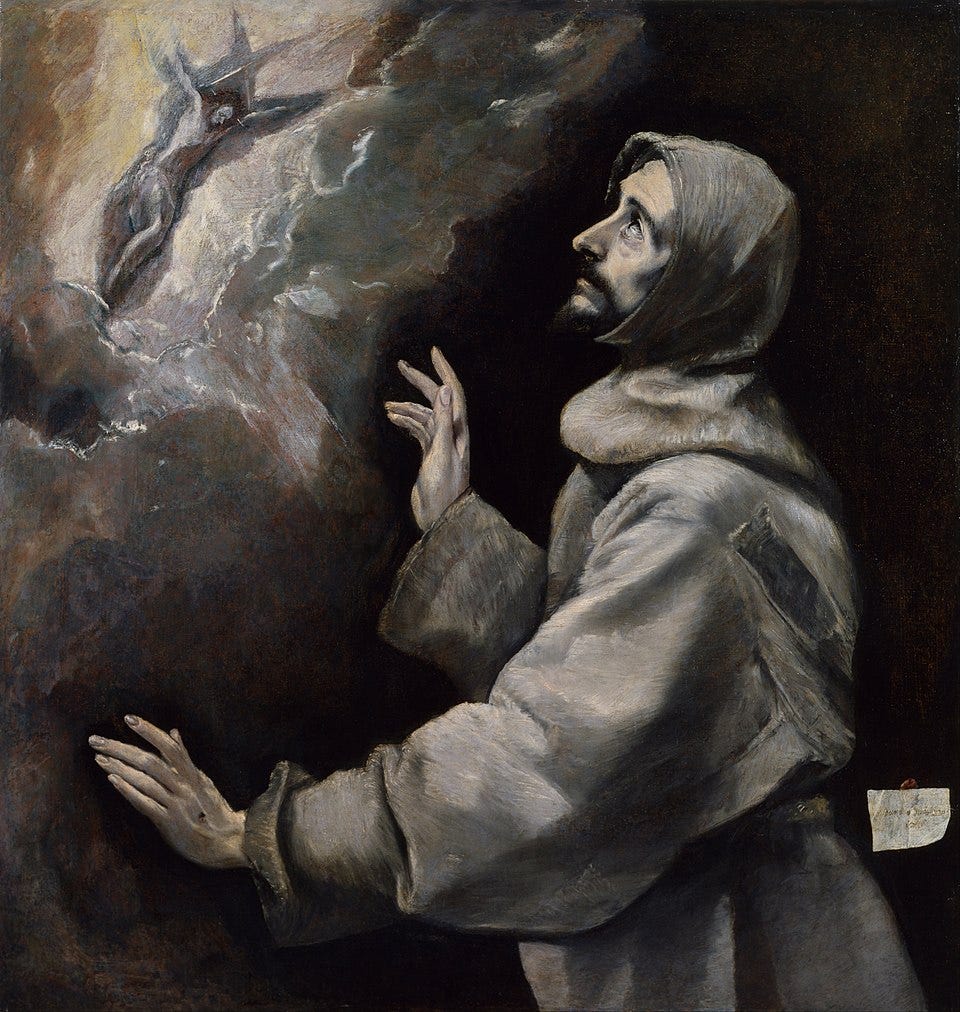
Above all, the contemporaries who may have appeared the most like the Cathars were Saint Francis of Assisi and his Franciscan order. They, too, abandoned earthly goods, and to great extremes. They wore only a single tunic with a cord, had no property or fixed dwelling, and often lived as beggars. When sending his followers out to preach, Saint Bonaventure writes (in Life of Francis) that Francis had them “take neither gold nor silver, nor money in their purse; nor carry a scrip; nor take two tunics, nor shoes, nor staff.” It is further recorded that when Francis and his brothers sought the approval of Pope Innocent III for their growing order, many viewed the strict poverty of his order as being “beyond human strength,” with the Pope himself being hesitant to grant it approval. Such was the austerity and discipline of Francis and his brothers, “casting away all worldly cares,” and “shaping his life in all things according to the strict rule of Apostolic poverty” (Saint Bonaventure, Life of Francis, Chapter III.).
Unlike the Cathars, the ethos of the Franciscans conformed entirely to the model of Christ and Catholic doctrine, seeking to evangelise Europe against heresies, hypocrisies, and spiritual lukewarmness. But even more than that, the Franciscan order was an answer to the Cathar heresy, and one which the Papacy rightly promoted as a remedy. It was no mere accident that the Franciscans arose at the very height of Cathar prominence, the very same year that Pope Innocent III called for the Albigensian crusade against the heresy. Catholicism and the spirit of medieval Christendom were based on a metaphysical universality, grounded in the intrinsic unity of creation with the Creator. There was no moral dualism of good and evil: evil was merely the privation of good, possessing no positive existence of its own. There was also no dualism of body and soul: the two were inseparably united in one ‘substance’. The soul was taken to be the ‘actuality’ of the living body, which it animates and ‘forms’ (see Thomas Aquinas’ Summa Theologiae, I, q. 75). The Franciscans fully accepted these truths, and even more than that, affirmed the possibility that radical poverty could serve the broader evangelical mission of the Church to redeem this world. Where the Cathars saw salvation in flight from the world and hatred of material things, Francis embraced the virtuous mean, seeing salvation in loving the world, in the right way.
The Franciscan response to Cathar heresy
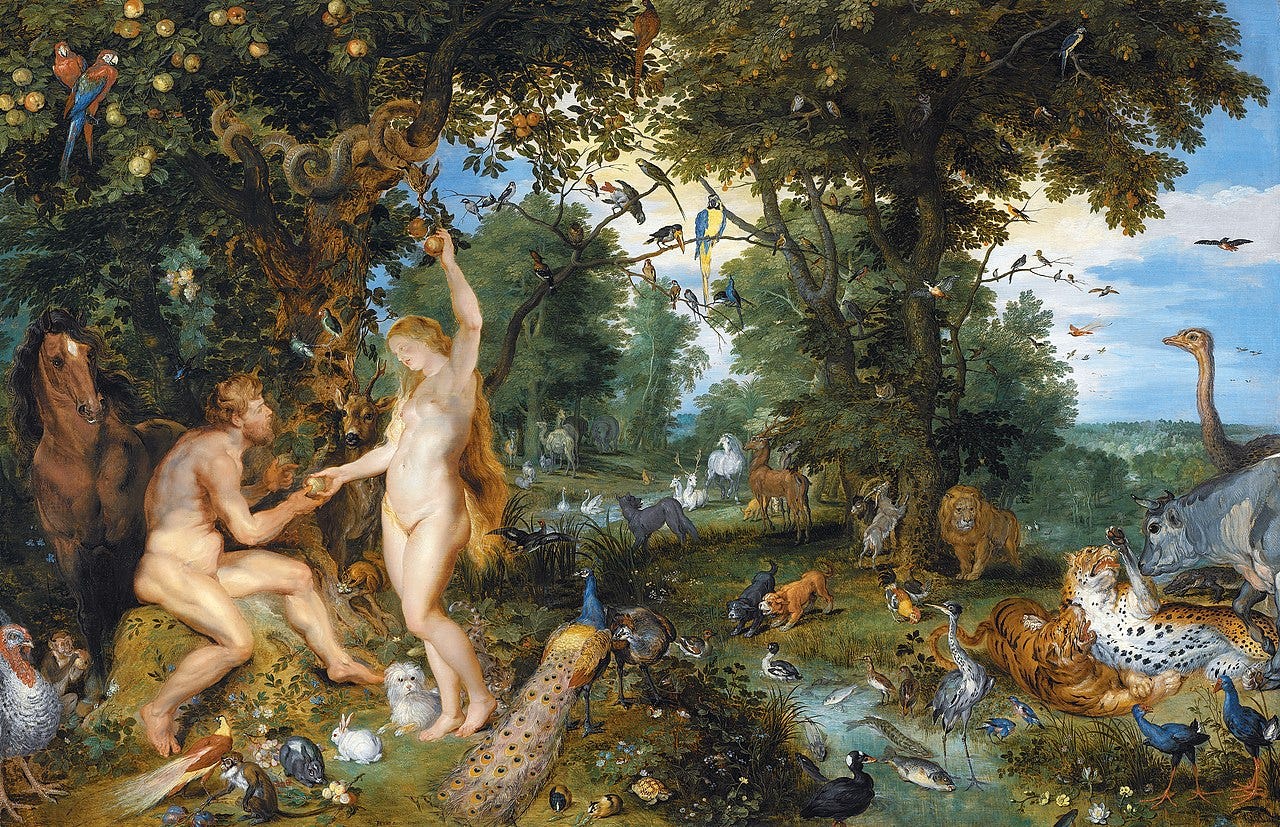
What did Catholic theology entail for the Franciscans? Just like for the Cathars, it begins with the fall. In Mortality in the Kali Yuga, we discussed how with the fall, an entire world, Eden, collapsed and became subject to death. But initially, this was not the case. The breath of life was blown into Adam and Eve out of dust, and creation was an abundant paradise of all the plants and animals. There is also a relation between man and nature in the ends that they both serve. Man has dominion over creation (Genesis 1:26), while creation serves to sustain mankind (Genesis 1:29-30). Creation is thus not opposed to mankind but exists for their sake in a hierarchical chain of being.
It is from this teleology of nature that the Franciscans develop their mystical theology: that, although mankind and nature are in a fallen state, they remain united in solidarity under God. But to understand the Franciscans, we ought to study Saint Francis himself and the mendicant life he sought to model. In contrast to his abandonment of worldly goods, Saint Francis’ life was marked by an enduring preoccupation with knighthood and chivalry. While the Cathars rejected the whole medieval world order, Francis embraced it wholeheartedly. In his youth, he even saw action at the Battle of Collestrada, and although he was never dubbed a knight, he was not dissimilar to other youths of his age, full of zeal, ambition, and inspired by the noble ideals of troubadour poetry. Thomas of Celano writes in his biography of Francis that in a vision of spiritual conversion, he (Francis) encountered “warlike weapons, to wit, saddles, shields, lances, and other accoutrements” which would belong to “his and his knights” (The Lives of Saint Francis). But the knightly ethic of service would take Francis down an entirely different path - one of poverty and prayer. His wars were not against humans, but against lukewarm spirituality. He wandered Europe not with a band of knights, but with preachers. Noble in spirit and virtue, yet humble in status, and indifferent to class.
Francis’ spiritual conversion is told with rich allegories, not unlike Arthurian romances. Francis speaks of having discovered a “hidden treasure”, and when the subject of marriage was brought up, he said, “I will marry a nobler and fairer bride than you ever saw, who shall surpass all others in beauty and excel them in wisdom” - Thomas of Celano explaining that “the spotless Bride of God is the true Religion which he took unto him, and the ‘hidden treasure’ is the Kingdom of Heaven.” In another text, the Sacrum Commercium, Thomas of Celano relates the search for and devotion of Francis and his brothers to Lady Poverty, “Queen of all the virtues”, described as sitting upon a throne on a high mountain but is also disdained and neglected by the people of this world, and of whom upon greeting they say, “Whereupon fallen at thy feet, we entreat thee humbly to deign to be with us, and to be unto us a way of attaining unto the King of Glory.” From this, the mission of the Franciscans becomes all too clear. They are at once monks and heroic soldiers of Christ, devoted to Lady Poverty as the knights of the Round Table were to the virtuous ladies of Arthurian Romance - and like those knights, they seek to restore her to her rightful place in the world.
This chivalric spirit is also visible in Francis’ attitude towards nature. Whereas in much of Christian literature, nature occupied a chthonic dimension to be conquered and subdued, as was the symbolism of dragons, Francis saw in nature a level of nobility bestowed by God in the broader chain of being. A famous example is his preaching to the birds, of which Thomas of Celano writes him saying:
“My brother birds, much ought ye to praise your Creator, and ever to love Him who has given you feathers for clothing, wings for flight, and all that ye had need of. God has made you noble among His creatures, for He has given you a habitation in the purity of the air, and, whereas ye neither sow nor reap, He Himself doth still protect and govern you without any care of your own.”
Then, following after him, the birds stretched out their necks and spread their wings to gaze at him. In his sermon, Francis conveys that his followers should preach not just to people, but to creatures, and reminds us that all of nature was created to serve God. He demonstrates the nobility of the birds by showing that their nature as creatures of flight is pleasing to God and gives him glory through their beauty. To the people of the Middle Ages, the air was seen as a realm between the divinity of the celestial bodies and the ground on which they lived. Thus, although lesser than mankind, God made the birds noble in their very ontology as creatures of the air mediating between two worlds, and in the same way, as we will see, Francis shows us that all of nature is praiseworthy through the role it occupies in the cosmic order.
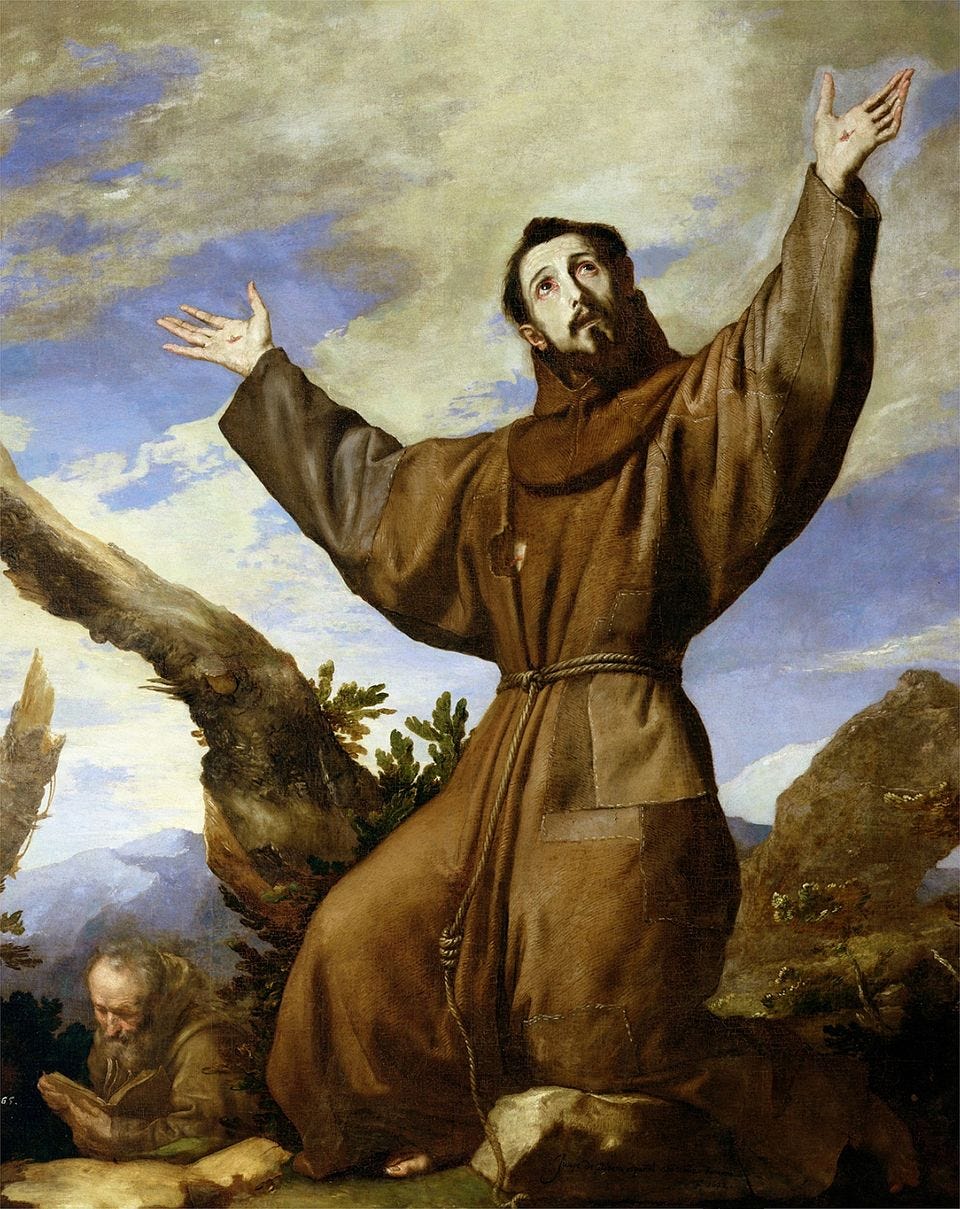
As such, even ravenous beasts were obedient to Francis, such as a wolf who, according to the Little Flowers of Saint Francis, had caused terror to the people of Gubbio, attacking livestock and killing people. But after Francis, addressing him as “Brother Wolf”, made the sign of the cross and commanded it to cease attacking people, he made a vow to make peace with the people of Gubbio and even lived in harmony with them, being fed daily by them. This story demonstrates that even the chthonic forces of the fallen order can be transmuted towards good, just as through repentance, mankind’s fallen nature can be redeemed. Thus, not only is man a participant in providence and the quest for salvation, but the whole world too.
Wherever Francis went, his affectionate regard towards nature seemed to be reciprocated. Saint Bonaventure records that on one instance, a rabbit that had always fled from other people, “committed itself fearlessly into his hands, and nested in his bosom.” Moreover, just as Francis devoted himself to the service of others and God in knightly chivalry, so too did the animals that were obedient to him, another instance telling of a lamb he kept with him in Rome that was committed to the care of a noble lady and attended mass with her.
The chivalric splendour of Saint Francis’ Canticle of the Creatures
Perhaps Saint Francis’ greatest expression of the chivalric kinship that all nature shares is his hymn, the Canticle of the Sun. Through it, he presents to us a vision of nature’s purposive beauty, both aesthetically in the Kantian sense and visibly real and objective in its teleological relationships. The Canticle begins by praising the Lord:
Most High, all-powerful, good Lord,
Yours are the praises, the glory, the honor, and all blessings.To You alone, Most High, do they belong,
and no man is worthy to mention Your name.
Francis thus reinforces the participative unity of being. While nature and God are not identical, they are not antithetical. God is central and through Him come all things eternal and transient, and by virtue of their origin, all things are good in their being. But they are not only good because of their origin; there is a revelatory quality to creation, which Francis expresses by emphasising the emanative procession through which nature and its fruits resemble and show the goodness of God, who is Himself goodness. The Canticle then proceeds with examples of how creation emanates from its source, beginning with the sun:
Praised be You, my Lord, with all your creatures;
especially Brother Sun, who is the day, and through whom You give us light.And he is beautiful and radiant with great splendor,
and bears a likeness to You, Most High One.
With these four lines, Francis introduces the familial brotherhood of creation. Nature does not merely praise God, but is commended with God, together with Him. Where in the previous lines Francis praises God for His blessings, now the Canticle is transformed into a eulogy to all creation, and thereby a celebration of existence in its entirety. While God is the cause, sustainer, and ultimate end of all creation, He gave creation a real identity of its own. Its own essence. A goodness derived by participation in God’s goodness, but analogous, not univocal or equivocal, to His goodness. As written in Genesis 1:31, “God saw all that he had made, and it was very good”.
Furthermore, creatures are not just good for God’s praise, nor for its own glory, but for the good of the rest of creation. As the fifth line relates, the sun serves all life by bringing us the day and its light. Crucial to this is how Francis hails the sun as Brother. The biographies of Francis always show him referring to the creatures he encounters (and by creature, we mean a ‘created thing’) as Brother or Sister, much like how he relates to his other friars as Brother or Sister. Far from denigrating his peers, Francis embraced nature in spiritual fellowship. This adds another layer of chivalry to Francis’ urging to preach even to animals. His first vision of arms being delivered to his knights to do battle was a metaphor for his life of preaching, gathering men to live in holiness, a theme that also extended to nature. Like how a sinner may be brought to obedience, “Brother Wolf” was brought into fraternity with others and reconciled with God. Through the Franciscan life of love and active care for all the world, everyone, and everything was to be brought back to their origin, back to their place within the cosmic hierarchy.
But simpler than conferring chivalric titles, we also get a sense of his own personal affection for nature. We see his appreciation for the gifts of nature and its inherent beauty, as he speaks of the sun’s radiance, great splendour, and likeness to God. His poetic eloquence, reminiscent of the troubadours, inspires emotional affection and conveys spiritual depth. The Franciscans, amid the rain, feet in the mud, often sleeping in caves and wandering forests, must have been in awe of Europe’s natural beauty. They were situated there, not just seeing it, but under the pressure of it, taking it in with every sensation. The cold of deep winters, the awful smells of wild beasts, the slightest touch of the wind, and the sun’s light filtering through the trees. Their mysticism was as much aesthetic and sensuous as it was contemplative. If God is praised through nature, then one can praise God through their experience of nature, which becomes clearer as we proceed with the Canticle:
Praised be You, my Lord, through Sister Moon and the stars;
in heaven You formed them clear and precious and beautiful.Praised be You, my Lord, through Brother Wind,
and through the air, cloudy and serene,
and every kind of weather through which You give sustenance to Your creatures.Praised be You, my Lord, through Sister Water,
which is very useful and humble and precious and chaste.Praised be You, my Lord, through Brother Fire,
through whom You light the night;
and he is beautiful and playful and robust and strong.Praised be You, my Lord, through Sister Mother Earth,
who sustains us and governs us and who produces
varied fruits with colored flowers and herbs.
Descending from the sun, Francis takes us through the cosmic spheres, revealing the various relationships at play between God, nature, and man. He begins the first line of each section with a praise of God and shows how His praise is amplified through His creation. He then describes the character of God’s creations. The winds are cloudy and serene; the stars and moon are precious and beautiful. He also uses personification, referring to Sister Water as humble and chaste. Through his descriptions, he also reminds us of God’s immanence in nature and how he acts through it for the sake of mankind, as he does with Brother Wind by expressing how it gives sustenance to all creatures by changing the weather. In elaborating on the interdependence between the various creatures and mankind, Francis shows us how God remains central in all these relationships. That it is He who ordered them, allocating each purpose accordingly for the fine-tuning of the world’s harmony. Everything is made to serve an inherently good purpose, and there is nothing designed for evil - evil is, in his mind, merely the failure of a creature to fulfil its own natural faculties as a result of the fall. But after this, the frame of the Canticle shifts again to spiritual matters, meditating on the soul and mortality:
Praised be You, my Lord,
through those who give pardon for Your love,
and bear infirmity and tribulation.Blessed are those who endure in peace
for by You, Most High, they shall be crowned.Praised be You, my Lord,
through our Sister Bodily Death,
from whom no living man can escape.Woe to those who die in mortal sin.
Blessed are those whom death will find in Your most holy will,
for the second death shall do them no harm.
The uniqueness of man as a being with free will brings nuance to our goodness in the light of God. On one hand, mortal sin leads to the second death, while good deeds give praise to God. But this is no different from how the rest of creation gives praise to God, for this goodness comes by acting in conformity with one’s proper nature. To do good is to follow the purpose God made for human nature in the way that the goodness of all things comes from their God given qualities and purposes.
But despite all his praise of life, Francis acknowledges the inescapability of death and even its goodness. However, whereas death is an aim for itself to the Cathars, to Francis it is an inevitable fact. This must be understood in light of Catholic eschatology. Death is not an escape. Rather, the fallen body must die for it to be resurrected in this world. Revelation 22 speaks of the earth itself being redeemed in a renewed Eden. Just as the soul is broken down and mended in true repentance, or ‘contrition’ (meaning to “grind to pieces” in Latin), and just as Francis underwent a spiritual conversion imprisoned in wartime, so must imperfections be shed away through a ‘grinding apart’ before a genuine renewal. Sometimes, something must be taken apart before it can be put back together, and this is especially the case with our imperfect, fallen bodies.
Such is the redemptive quality of the Catholic tradition, embracing all existence and seeking to perfect it through the power of God. Francis’ loving devotion to Lady Poverty must be understood in this context. Such poverty enabled God to perfect the fallen soul. This was not just material poverty, brought forth by circumstance, but a spiritual poverty, deliberately sought. To be without such poverty leads to pride in (and love of) the vain and passing things of this world, not recognising their participation in God’s power nor their beauty, but rather the fleeting pleasures they bring. Poverty leaves the soul pure and clear for God to work within. It allows us to recognise our own fallenness and need for redemption. But most importantly, it enables us to see the truth for what it really is, discarding any false impressions.
The Cathars and Franciscans alike were men of poverty, but their radically different cosmologies led one to reject life and the other to embrace it. Evil is certainly experienced in the fallen world, but it is not an inherent ‘being’ that inheres in any animal, man, or thing. Where one saw good only in immateriality, the other shone light on all things, not just revealing their good, but redeeming even the shadows and transforming them into light.
Much of Saint Francis’ life was spent preaching against the Cathars, who inhabited many of the cities in Italy. His biographies describe how the Franciscans drove demons out of cities who were responsible for civil strife. Works of art, such as the frescoes of Giotto in the Basilica of Saint Francis in Assisi, also depict these tales. He was a knight without weapons, defences, and armour, yet he persevered amid the violence of his age. Through words and good deeds alone, he brought peace and conversion. Saint Bonaventure, writing of such moments, says of him that “shining like a morning star in the midst of a dark cloud, he enlightened by the bright rays of his pure doctrine and holy life those who lay in darkness and in the shadow of death, and thus guided them onwards by his bright shining to the perfect day.” This was a life dedicated to seeing the world redeemed, in creatures and persons alike. While the Cathars, in their poverty, sought total passivity, Francis and his friars were driven by an intense passion that led them to radically heroic and self-sacrificial lives.
Saint Francis was Catholic in a total sense, in its original sense “katholikos”, meaning “universal”. Not merely as a denomination, but as an ethos. In his Canticle, he reconciled the cosmos. In his preaching, he reconciled men and other creatures to God. He lived humbly, yet did not despise the wealthy or the noble. He loved the goodness of life, yet did not worry about losing it. His mysticism embraced all, spiritual and material, in the spirit of ennobling the fallen world. In writing of his plans to preach in Morocco, Saint Bonaventure beautifully expresses the heroism with which Francis faced the risk of death. In this moment, we see the fullness of his faith and devotion to redeem even those who may hate him, and to bless those who may do evil to him:
“Francis, the valiant soldier of Christ, hoping shortly to attain the end which he had set before him, determined to undertake the adventure, not terrified by the fear, but rather excited by the desire, of death. Having, then, prayed to the Lord, and being strengthened by Him, he sang with great confidence those words of the prophet, ‘Though I should walk in the midst of the shadow of death, I will fear no evil, for Thou art with me.’”
But for all the good of the world, the ultimate end and good was always God. It was He that Francis sought in nature, it was He that he travelled to preach for, it was He that he lived in humility for the praise of. While the Cathars detached themselves from all worldly things, to Francis and the Christians of the Middle Ages, they were merely temporal goods. Good, but corruptible and passing, and not to be misused or elevated above the eternal goods that God promises. God completes desire. For He is the Good itself from whom all goodness proceeds. Man desires infinitely, and passing goods never satisfy eternally. Only God is infinite, and only in Him can eternity be found. The Canticle ends thusly:
Praise and bless my Lord,
and give Him thanks,
and serve Him with great humility.
Amen.