

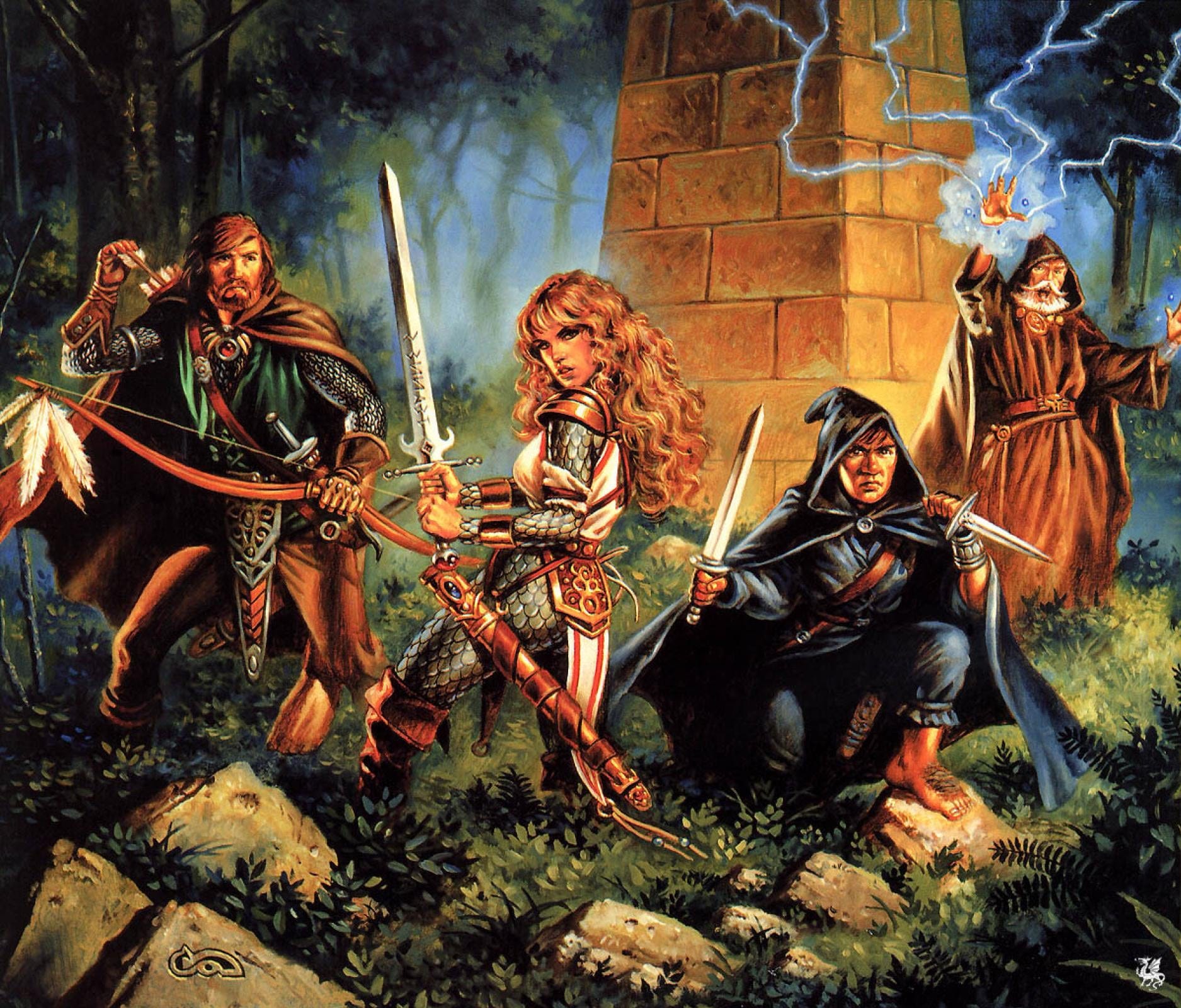
Background and Initial Considerations
Fantasy is one of key genres of artistic exploration within the contemporary modern era. Much could be said of its general cultural impact, whether in the medium of fiction writing, art, film, and so on. We touched on such considerations of the spiritual implications of fantastical imaginings in another work of ours (see our “The Spiritual Dangers of Anime and Manga”, Pt. 1, and Pt. 2), but we wish to expand here with regards to a culture that has been cultivated more so over the last 50 years. We speak of course of the realm of Fantasy RPGs.
Whenever there is an impulse or imaginative process that pulls one away from some aspect of our reality, there is always the risk of an individual to lack proper apprehension as to what our reality, and even more so realities higher than the physical, truly is. Certain assumptions or cosmological systems in fantasy detract away from greater realities and truths, especially when there’s a strong emotional or general mental attachment to these lesser imagined realities. There is certainly an intoxicating element to fantasy, and fiction in general, but it is another thing entirely when one controls the narrative and how it interplays with others.
There is a certain demiurgic quality to being the arbiter of imaginative worlds, either as a writer, or a scenario director referred to as the “Dungeon Master” (DM) especially. Even though the world one may be inhabiting is created by another, it gives rise to creating one’s own worlds and one’s own entities within these worlds that take on a life of their own, either in the context of the narrative or even outside of the game as well. The same is true with regards to readers and players as well, either the reader inserting oneself into the role of the character, or, with the game, imagining a character as themselves, even if in a limited and purely imaginal capacity. Still, this lesser reality is real, since the effects of it are real to the participant, and this is the key to our discussion that we must now delve into with greater depth and care, so as to not be misunderstood or thought too puritanical, but with all proper considerations taken into place to maximize the importance of the spiritual end to which we ought to all be directed.
The Formation of Fantasy as Genre
Fantasy as a genre began in the Romantic period of art and literature, with the popularization of the fiction novel hitting an apex of popularity, to the point of being called a craze and being recognized as a potential societal threat by many of the religious revivalists of the time period. Fantasy wouldn’t really come into its own without a series of key works: Phantastes and The Princess and the Goblin by George MacDonald, The Well at Worlds End by William Morris, and Alice in Wonderland by Lewis Carroll. It is important to note that not only do all of these authors hail from Great Britain, carrying on certain aspects of the British literary tradition, but that all of the major worlds that these stories participate in are either completely separate or partitioned realities separate from our world - the realm of fantasy.
The major themes focused on in these works have to deal with chivalry, virtue and exploration in the former three works, whereas in Alice in Wonderland the fantasy takes on a decidedly nihilistic and nonsensical character in its complete indulgence in the fantasy narrative. The important thing to note here is that the former three examples, the works of MacDonald and Morris, reflect an championing of higher ideals and truths of a supra-human character, and would go on to inspire the works of J.R.R Tolkien via the writings within Middle Earth, as well as the writings of C.S. Lewis with regards to his Narnia and Screwtape narratives. The same cannot be said for Lewis Carroll, taken in consideration along with his personal struggles and controversies, which betray a lesser expression of the fantasy genre that devolves into lesser, infra-human territory of a more pernicious character to the imaginal worlds that can be created.
The former three examples, and works that extend from it, also make use of imagery and cultural information that extends deep into European folklore, with regards to goblins, faeries, dwarves, gnomes and other fantastical creatures of a deeply symbolic value, either reflective of subtle spirits or symbolic of, like dragons and unicorns, that which is to be conquered or achieved as an ideal.
As a result of this recognition, Fantasy can indeed be a medium that achieves and points to greater truths of a Traditional order, with The Lord of the Rings and The Chronicles of Narnia being champion examples of great quality, each having deep esoteric truths being hidden within, much of which escapes many of the fandoms and individuals that enjoy participating in such media (which is a topic we could return to at another time). Fantasy as a genre mainly falls short by not being as overt with its message and relying more on the narrative and symbolism to communicate certain aspects at a subconscious or more covert pathway.
Despite this, Fantasy can also lead into a large “stepping away” from universal truths and more so pushes towards a veritable madness and abyss. Not only can this present as absurdism, but this can also lead to both confused conceptions of the temporal and spiritual histories of mankind as well. The works of Robert E. Howard and his Conan writings reflect a confused nature of what early Iron Age peoples looked like, with his so-called “Hyborian” Age after the fall of Atlantis during the tail end of the spiritual Bronze Age, whereas the true Hyperborean man existed during the Silver Age which preceded the Bronze. Similar impulses can be seen in the works of H.P. Lovecraft as well, with the imaginations of early humanity in times past, going against certain modernistic and scientific trends that denied the existence of civilizations that went before the pre-history of roughly 4300 BC, even going so far as to consider anything before the year 600 BC as “legendary” history. Even though their intuition, with regards to the existence of a higher states of man in times past, was well founded and reflective of the truth of the matter, the way in which these manifestations presented in their imaginations was more so a reflection of certain modern biases and impulses that led to relative incomprehension to the truth of such matters.
H.P. Lovecraft, however, took things a step further to create a seemingly anti-Traditional cosmology, that has been termed the Cthulhu Mythos. The existence of a Cthulhu, as well as other “cosmic” deities, which could only appear as demonic to anyone with a degree of sensibility, either in the subterranean depths of our words of in the cosmos beyond, creates a despairing and nihilistic view of reality, in which humanity is but an aberration and unlikely participant within the greater cosmos, in the context of great and horrific beings that originate beyond conventional time and space — malefic beings that not only do not wish us well but drive humanity into madness upon viewing them.
This latter point is a relative inversion of supranatural states of consciousness into which one comes into contact with the Divine ineffable through spiritual practice. This offers the supposition that anything “supernatural” is both dangerous and solely of an infernal or demonic persuasion, which prefigures certain impulses towards the forwarding of the potential for superior “extraterrestrial” forms of life, in comparison with which humanity seems relatively insignificant, which may be a partial reaction of the movement away from a more human centered geocentric cosmology towards a, though scientifically correct, unmoored heliocentric cosmology that makes humanity lost among the stars.
All of these aspects of fantasy, both positive and negative, either through more refined high expressions of the medium or through the aptly named “weird fiction” or low presentations, coalesce, more or less, into the major presentations of fantasy in the various Fantasy RPG systems that exist in the world today, which brings us to our next focus.
The Popularization and Effects of Fantasy RPGs
“The Shadow that bred them can only mock, it cannot make: not real new things of its own. I don’t think it gave life to the orcs, it only ruined them and twisted them”.
-Frodo, The Lord of the Rings
These Fantasy impulses within the collective unconscious of the post-modern age only naturally would come to manifest beyond just the imaginings of particularly influential individuals within the literary sphere and would transition towards other individuals making their own fantasies on a much more personal and localized scale. The gamification of fantasy via the Table-top RGP (TTRPG) is the most natural form of progression, and Dungeons and Dragons (DnD), created in 1974, fills that void. The successes of this game would lead to the creation of a greater plethora of other games, including the Call of Cthulhu in 1981 (to make evident the influence of the aforementioned mythos of H.P. Lovecraft), Warhammer in 1983 (followed by Warhammer 40,000), which took a turn towards more science fiction impulses like Shadowrun in 1989, then in other tenebrous impulses via Vampire the Masquerade in 1991 (the topic of vampirism popularization a topic for another potential article), and then returning back to the domain of fantasy proper with Pathfinder in 2008.
The game of DnD heavily borrows from much of the aesthetic and creations present within Tolkien’s Middle Earth, whose influence on greater fantasy is undeniable, as well as certain pagan influences, with the presence of various “gods” by which one can be aligned or non-aligned, on top of the recognition of celestial and demonic beings, the latter sometimes coming under the guise of the Lovecraftian influences. Many other properties, Pathfinder and Warhammer included, would not be as successful without the initial influence of this particular game.
What is positive about these games is the fostering of the recognition and participation in archetypes, which are emblematic of the core presentations of the human personality and the vocations that extend from these identities. Take for consideration that the original DnD had 12 classes to pick from: Barbarian, Bard, Cleric, Druid, Fighter, Monk, Paladin, Ranger, Rogue, Sorcerer, Warlock and Wizard (with Artificer being added later, reflective of certain industrial modernistic deviations). Compare this to the 12 signs of the Zodiac, both in Western and Eastern Traditions respectively, which are reflections of archetypes emanating from a Divinely ordered cosmology. The number 12 is associated with Celestial Order (compared to 10 which is Temporal Order, see our article on The Esoteric and Cosmological Significance of Four for more numerology), which is why there are 12 Disciples that follow Christ, just as there are 12 Knights of the Round Table, amongst other reflections of the same esoteric truth.
These archetypes are key dispositions that one can foster towards achieving certain outcomes via spiritual practice, with the Kshatriya, or “warrior elite”, mindset being most evident with classes like Fighter and Barbarian, whereas the vocation of the ascetic can very well be reflected by the Monk. A Brahman, or “priestly”, disposition is well evidenced by the Cleric, and arguably the Druid, even if little is known about the Celtic Tradition by the masses today, and the fusion of the warrior and priestly is seen easily in the Paladin archetype.
Archetypes are a major part of the esoteric interpretation of the Tarot as well, with the Hermit being reflected by the solitary nature of the Rogue (though in a negativistic interpretation), but even more so by the Ranger, and the spirit of what a Hermit truly is can easily be reflected by many of the other classes as well, if properly considered. The same can be said for the archetype of the Fool, in which the Bard may be most emblematic of, unless a Holy Fool is considered, in which the other classes could easily more so apply. For the archetype of the Magician, or Magus, this is reflected especially by the Wizard, in its positive representation, and in the negative for the Sorcerer and Warlock. Similar Traditional archetypes could, of course, be undertaken, even if latently and unconsciously, in other RPGs beyond DnD as well.
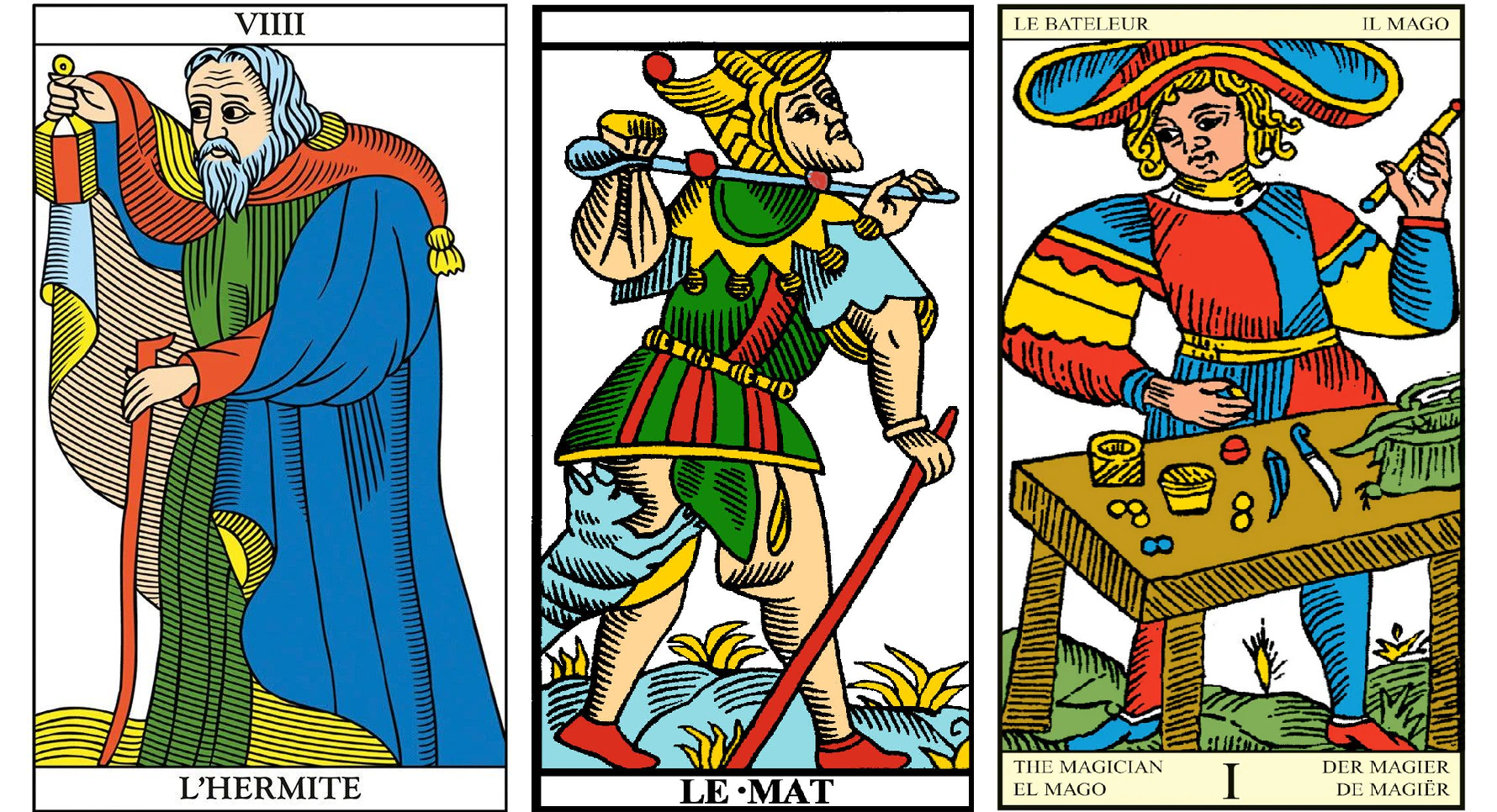
Each of these Archetypes could warrant a discussion in their own right (which may be a task for another time), but suffice to say that there can indeed be transfiguring and positive outcomes from strongly identifying and bearing out these archetypes in practice, even in play, but even more so if that play predisposes towards truly operant spiritual practice. The issue with Fantasy RPGs, tabletop or otherwise, is that this rarely manifests in this manner. In fact, we would argue that everything else to the contrary is what is experienced by the lion’s share of players.
Firstly, we must note that the majority of players do not take any transfiguring intentions with their style of play. Instead, most players make their games into an exercise in unrestrained will and fancy, using this virtual world to do all the things they wish they could do in their everyday lives - not literally of course - such as be heroic, take initiative, to be adventurous, charming, aggressive, and so on, as opposed to conditioning themselves to actualize these dispositions in the real world. Their fantasy runs wild and even detracts from the importance of their real life experiences. Arguably, one could take the experiences of the game and view them in the context of real life, in such a way as to gain perspective and improve one’s own personal attitudes, and by extension experiences. The issue, however, is that this is rarely what happens, and, instead, players often take their “wild flight” of the will to see how much they can get away with without consequence, and even go so far as to do things they would never do in real life. Naturally, one’s real life suffers when the virtual world takes precedence in one’s mind, especially when these experiences are more satisfying than any aspect of one’s real life. It is a dangerous distraction, from both salvation and realization.
We need only harken to one piece of media, a documentary called The Dungeon Masters released in 2008. It follows the lives of three seemingly ordinary people, dealing with real life struggles and difficulties, going about, admittedly, commonplace existences, but what unites them thematically is that they all participate in being avid players of DnD. Much of these players’ identity and focus is on their hobby, and its evident, based upon where their priorities lie, that such levels of devotion are not present in their real life endeavors. Whether it comes to finances, career, or orienting oneself to that which is higher, little to none of this is present within the lives of these documentary subjects. The documentary barely even focuses on the game itself, just more so about their life experiences on the outside of the game, which probably explains the film’s poor performance and reviews, but we found it to be a rather sympathetic and thought-provoking watch. No doubt many players of DnD could easily sympathize and identify with such individuals, whether it be an uncomfortable view in the mirror or not.
Second, we must harken to a decidedly tenebrous character latent within such RPGs, which is the occult influence of participating in such games. Many both scoffed and took seriously the accusations that players of DnD in the 1980s were participating in witchcraft and demon worship in the act of playing the game, under the guise of the Satanic Panic of that era of American History. This claim warrants rebuke from many, the players especially, because it seems so outlandish on its face, plus those that participate with the game do not acknowledge consciously participating in any degree of demonic or satanic worship, whereas the stereo-typical “Bible-thumping” Conservative Christians of the era were quick to decry anything that broached upon what could be termed demonic, as well as not being able to adequately articulate their reasoning as to why it was so, due to their lack of occultic theory or intellectual refinement. We will say in passing, that Julius Evola once remarked that the American mentality is reflective of an inversion of the famous maxim of Descartes, “Cogit Ergo Sum”, and were more indicative of a state of mind that could be summed up as: “I don’t think, but I still am.” There are many issues present in American Christian intellectual spheres, and this is but another symptom.
We, however, hold the same claim as these Conservative Christians, but do so with a more fully realized view into the phenomenon. We spoke previously on the nature of the demonic in media previously (see our The Demonic Nature of Memes, the Internet, and AI), and we will say that much that we have said before applies here as well. The nature of unseen spiritual warfare against thought-forms and ideological superstructures, which can be properly termed demonic, is completely ignored or misunderstood by post-modern man, having no basis of understanding of spiritual or psychic reality and even going so far as to posit that there is no objective reality at all — and even that physical reality is subjective! People don’t even realize that they are being arrested mentally, in the act of being oppressed or possessed by subtle forces, and its rather troubling the level of illusion that seems to be over the eyes of the public in so many domains, with this subject being no exception.
When people create and recognize a character, either the player character or non-player character (NPC) within the game, as an idea and conception with its own agency, this entity takes on a life of its own independent of its creators. These egregores, collective thought forms, have a definite effect upon the psyche of those that engage with it, especially if they’re immersed within the fantasy of the game, eliciting emotion, mental activity, and engagement. People become devoted to these characters, they view experiences inside and outside of the game through the context of the experiences derived from these characters, and the same is true for games as it is for television and films. Such matters lead to a confusion of the highest order, with the virtual world having greater importance than the physical — a veritable psychic prison, where the prisoners would rather be inside than outside.
Though most people engage in this process unconsciously, we can guarantee to you, dear reader, that there are others out there that do indeed engage in conscious demon creation and worship through the use of the RPG, indicative of the Left Hand Path persuasion of “counter-spirituality”. If you should not believe us, we need only point to the existence of one work by the name of The Book of Antithesis, which outlines this entire philosophy and mode of praxis, and we will note in passing that the author of this work is also an avid writer of RPG scenario manuals, even those officially released under the DnD name! We could speak more on this here, but choose not to divulge too much in this format, and we should caution others from looking too deeply into such subjects and circles.
To bring all these pieces together, even if the RPG could be indicative of certain transfiguring possibilities and possess a certain Traditional character, if properly oriented, the dangers of such a thing far outweigh the potential benefit. These infra-human impulses ultimately pervert and invert anything possible about it and turn it into something less than positive for the whole of humanity. To take this a step further, we shall take into account another dimension of the RPG that we have not brought into frame yet that will make these concerns more evident.
From Tabletop to Computer: RPG Video Games and the Rise of the MMO Format
Consider for a moment the amount of time that people, as a collective, have spent on TTRPGs since their inception. Whatever figure you have in your mind, I can guarantee you that an exponentially greater amount has been devoted to video games. At least with TTRPGs, people have to all be present to have a cohesive play session, which is difficult enough to achieve in times like these with the economy of time in the world at large, though arguably, with the advent of the internet, this has been easier to achieve in recent memory. By association, though video game RPGs (VRPGs) have been around for a while, since at least the 1980s with text-adventure games and more, integration into the online sphere has opened up a dizzying horizon of possibilities for this style of game. The potential for distraction in our day and age is unparalleled when compared to any other time in human history, with so many trenches to fall into that bring us facing down towards the earth, all to be so easily covered up within it.
Much of the VRPGs that are influential today stem from the same fantasy impulses that exist in TTRPGs. Games from the Elder Scrolls, and by association Fallout through the output of Bethesda, come to mind, as well as Baldur’s Gate, an offshoot of DnD, along with many others, with the Dark Souls, and so-called Souls-Borne series of games from FromSoftware of which Elden Ring also participates, being a somewhat return to form of high fantasy (a topic for another time). The important factor to note here is that the majority of these games are exclusively single player, which is ideal with regards to immersion, game design, and for the experience to be consolidated and finished more easily. If these VRPGs are, instead, multiplayer then often these elements are not the primary game focus, and if they are then the number of players often does not exceed 4 or 8 simultaneous participants. The issue comes when there are technological “innovations” that allow thousands of participants to participate in the same virtual “game world”, all predicated upon this fantasy mythos and system of interface, all achieving ends of a rather concerning nature. We of course are alluding here to the popularity and existence of Massive Multiplayer Online RPGs (MMORPGs).
The internet age has many unintended side-effects, some of which we have already touched upon elsewhere, but the same effects can be seen in the realm of Fantasy, and the advent of the video game facilitates these impulses. The desire for greater immersion and for interactivity, as well as a lessening of the imaginations of contemporary western society, have led to the creation of these MMORPG virtual game worlds, by which people devote countless hours of their lives. Much of the early popularity began with games like Everquest in 1999, followed by the successes of Runescape in 2001, but the real growth wouldn’t be until the release of World of Warcraft in 2004, along with the various expansions and “classic” servers that are released progressively up until time of writing, with no sign of stopping, creating many other expressions with names such as Final Fantasy IX and XIV, Ultima Online, and Guild Wars all in the domain of Fantasy, and even Star Wars and EVE Online in the realm of science fiction.
Without getting into too much minutiae, these MMOs are incredibly pernicious for the sole fact that there is no end goal in them, allowing for an indefinite escapism of the participant that is further facilitated by a collective participation by countless others in the same imaginal realm. Of the various aspects of modern gaming that are dangerous for the contemporary individual, this one deserves special attention. Though the best versions of gear can be sought, progression through various in-game experiences to completion, professions and so on for a singular character, this can simply be done for and indefinite amount of other characters as well, and for a multitude of servers as well. If one finds oneself addicted to such mania of activity, one could find no end to such quests, insofar as one doesn’t burn out on the experience, but the flame can just as easily be rekindled as it is extinguished for many, creating a system of comfort and dependency to wish to engage in such endeavors, either purely for self-enjoyment or to recapture some degree of sentimental experience from times past.
We must also note that these MMOs also predispose many to a certain mindset that we could call “virtual materialism”. Despite the items and money in the game not being physically tangible, people hoard large amounts of both towards the end of capitalistic endeavors, both inside and outside the game itself. People spend countless hours “farming” in game currency and items towards the end of dominating markets or participating in gross speculation, like one would with trading stocks and bonds in the secondary market. Not only does this trap individuals within this cycle of constant maintenance of their habit of playing the game, it even enslaves them to it even further by being a source of income for some. People will even create AI-bot programs to play the game for them on several devices simultaneously towards the end of profit and progressing characters, a hyperquantification of the experience towards purely quantitative value, without any respect to the quality of the game to be played (and we should add that many companies are permissive of this practice, insofar as the game as a whole is not disrupted and it gains them more money via subscription based service models). People go so far as to trade this virtual money for real life money as well, especially for those in lesser developed countries where the in-game currency is more valuable than their real world country’s legal tender. Just another instance by which people become enslaved to the machine can easily be found in the MMO, to where Fantasy, in any positive or negative presentation, is lost entirely from the spirit of the being within the medium of the game.
We must confess some personal experience on our end: we have indeed participated at length in MMOs in the past, and video games in general, for more time than we care to admit. Our need for spiritual development has put much of this behind us, though it is easy to backslide into such hobbyist tendencies if vigilance is not maintained. We more than likely have much first-hand knowledge of the inner workings of such games — their communities, and the culture that is borne of such spaces — more so than the average individual, and we have no doubt put in thousands of hours into a single game alone. Our experiences are surely similar to that of many others, but the outcomes of such experiences are so varied that it leads to the realm of morbid speculation. We felt the need to escape from such fantastical prisons, or else be consumed by our own desire for escapism and fun, but there are greater things in life than the hedonism of such activities.
There are many horror stories that extend from such communities: parents neglecting children, people losing their livelihoods, suffering medical conditions, destruction of marriages, and all as a result of being a slave to a fantasy world that doesn’t really exist — yet still has such a hold over the real world. If such unfortunate circumstances can be so easily made manifest, imagine how much worse the psychic and spiritual casualties of such activity that is unseen comes as a result.
Conclusions
The chasm of vice is wide and deep indeed, easier than ever to fall into in this day and age — and all it takes is temptation and a momentary lapse to slip along the way.
Imagination, just like wisdom, is a passive process, and it’s also easy to fall prey to having one’s imagination run away into all manner of directions as a result of the will, either of oneself or another’s. Imagination, just like thought itself, runs away with itself, following its own path and logic, making it hard to pin down and control, let alone to try and master. If one lets one’s imagination run wild in its uncontrolled flight, we ourselves might find ourselves controlled.
Just like when we spoke previously, when cautioning about spiritual dangers, not everyone will fall victim to the extremes of such influences, but those that do either fall into ruin or take much time to climb themselves out from the pit they’ve made for themselves. Still, if one cannot stay away from such influences without suffering the worst consequences, we must remind the reader:
“And if thy right eye offend thee, pluck it out, and cast it from thee: for it is profitable for thee that one of thy members should perish, and not that thy whole body should be cast into hell.” [Matthew 5:29]
If one cannot transfigure experiences into a positive spiritual development, then it may very well be better not to engage in them at all, no matter how enjoyable they may be. Just because something is pleasurable does not mean it is good for us, whereas, more often than not, things that are displeasurable are often to our benefit toward cultivating virtue that leads us upwards (see Boethius's Consolation of Philosophy). We will leave this discussion at that with one final thought, and we leave it up to the reader to decide which is greater — what is more important, what is in the moment or what is in eternity?
“Games are fun, but just because they are fun does not mean they are good.”
I wouldn't have predicted that people would opt for in-game currency over their national currency. Thought provoking essay all round.
On the topic of imagination, although getting lost in it can definitely be detrimental, I think it can also be useful to exercise it so it doesn't become dull, just as it's useful to exercise memory and logical thinking for the same reason.